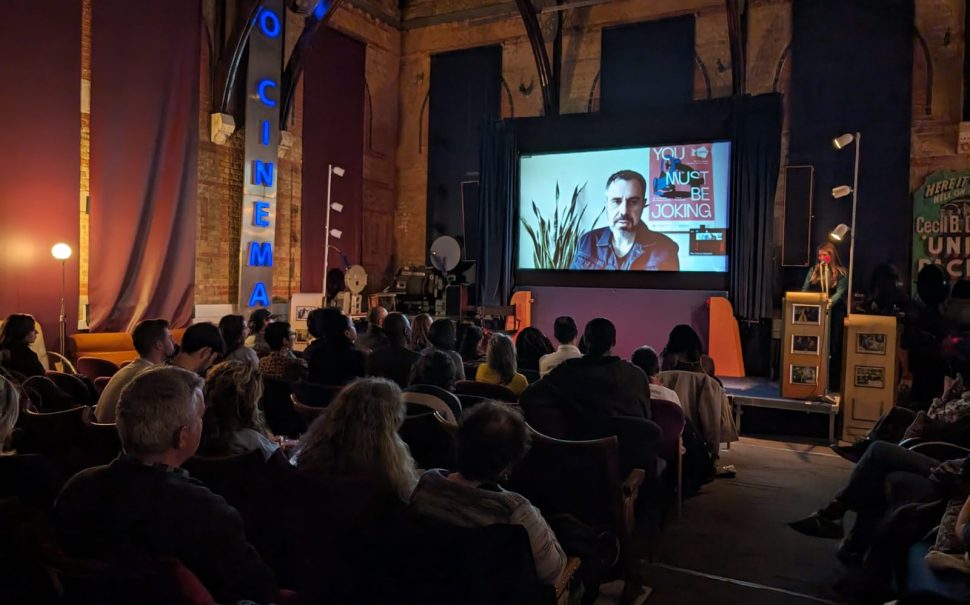
Cine Brazil is a socially minded cinema project bringing Brazilian filmmaking to London audiences.
Set up by three Brazilians who believe in the power of cinema, Cine Brazil began life in 2019.
Since then, the project overseen by Annaís Berlim, Laura Carniel and Louise Carpenedo has held over 20 screenings across London – including UK premieres of films like Marianna Brannand’s Manas (2024).
Berlim said: “We try to follow the social and social calendar in Brazil, but we also try to connect with the calendar here in the UK, to make a hook and build interest for UK audiences as well.
“Or if there is an important incident in Brazil, we try to organise a screening around that.
“So, for example, last year there was a flood in south Brazil. We were like, ‘let’s organise a screening so we can raise funds and sent it back to Brazil.’”
Cine Brazil tends to pick films which showcase the intersection of art and social justice, such as indigenous rights or LGBTQ+ visibility.
Essentially, it is filmmaking which stretches beyond reductive ideals sourced from “Brazil core” – a recent social media trend which led to 2026 Carnival being the most attended by foreigners yet.
Official figures from the Ministry of Tourism showed that 300,000 foreign visitors arrived for Carnival in 2026, up by 17% on last year.
Indeed, walk down any high street in London, and you’ll be sure to encounter someone donning “havvies” or a Brazilian football shirt.
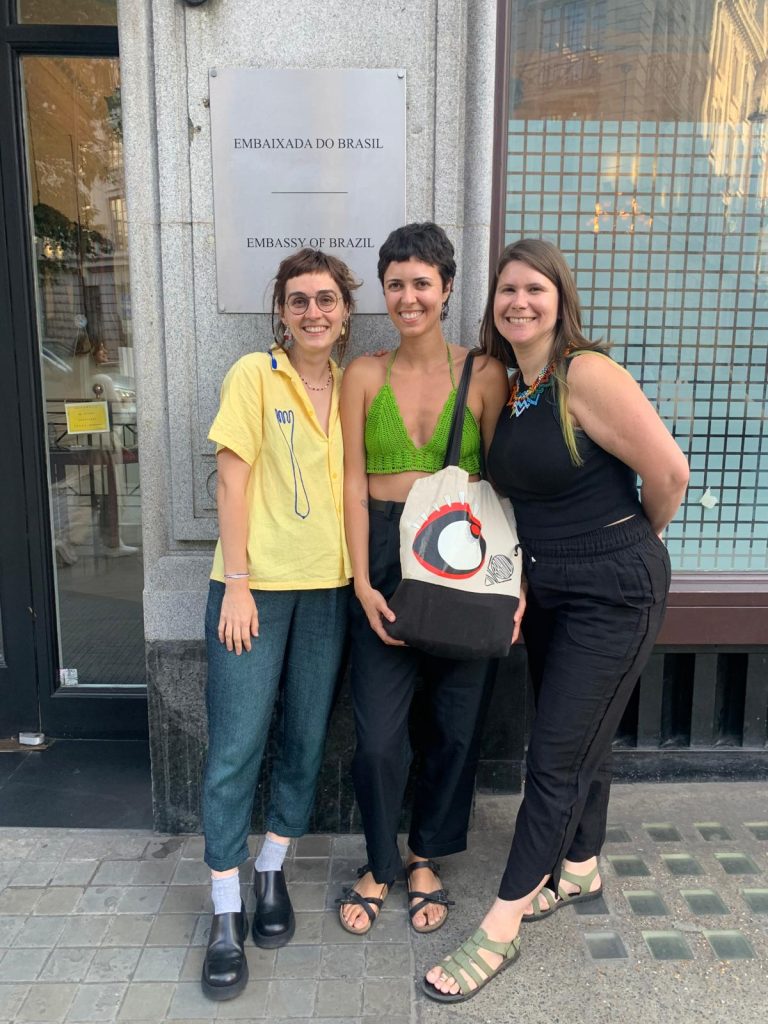
While the trio are understandably wary of their culture becoming a fleeting trend, they were also aware of this being the moment to seize the airtime.
Carniel said: “This is an opportunity we have to use – to bring in what Brazil is really like and what they should be looking at instead of all these mainstream things.
“So, yeah, it is an issue, but at the same time, it is also an opportunity because otherwise we may never reach that point of visibility internationally.”
The international recognition of Walter Salles’ Ainda Estou Aqui (2024) and Kleber Mendonça Filho’s O Agente Secreto (2025) has also boosted external interest in Brazilian filmmaking.
Some call it a boom period, but Berlim thinks otherwise.
Berlim said: “I think it’s not really a new thing.
“There is evidence that there has always been great demand for Brazilian cinema.
“Since Screening One, our screenings have sold out.
Berlim added: “The three of us, we all think that this is directly connected to the political landscape in the country.
“I also think that those Brazilian films which have been internationally recgonised, they are all focused on dictatorship.
“I think this is a response to the global rise of the far right, I think as a way of the mainstream platforms, to try and showcase, this is what happens, this what can happen.
“During Bolsonaro’s government, there was no money for filmmakers or for arts or for culture at all. So there were no really good films being made.
“With Lula taking office, there was a huge change. So Brazil starts to create and produce more films. I think there’s also money for international campaigns for the films.”
What has changed? The government’s backing of the arts.
Lula began his second term as Brazilian President in 2023 and in 2024 passed laws mandating that Brazilian cinemas must screen Brazilian-made cinema, and that paid-for TV must also show homegrown products.
This had followed a vulnerable period for the arts in Brazil as Jair Bolsonaro’s far-right regime between 2019-2022 repeatedly targeted the arts and cut national funding from cinema to music to museums.
A fervent anti-vaxxer during the Covid-19 pandemic, Bolsonaro threatened to remove funding from any state that promoted virtual cultural activities and supported social distancing.
Moreover, Bolsonaro’s posturing towards Donald Trump meant US culture was presented as the ideal, rather than celebrating Brazil’s own diversity.
Carniel said: “There has been a big rise inside Brazil as well of valuing our national cinema.
“People are getting used to seeing Brazilian titles in their cinemas, which, when I lived in Brazil ten years ago, it was hard to find Brazilian films – even if you wanted to watch them.”
In reality, there is an abundance.
The founders cited Faith and Fury (2019) and Onda Nova (1983) as evidence of the wealth of radical, investigative and thought-provoking cinema being made in Brazil.
Chatting from Barcelona, Carpenedo particularly loved The Fabulous Time Machine (2026) after getting to see it during February’s Berlinale Film Festival.
Carpenedo said: “It was really nice to see how well represented Brazilian cinema was there – the space that it has.”
The profits from Cine Brazil’s screenings go to grassroots charities in Brazil.
Initially, they would try to match the charity to the screening but cost forced the team to change models after the pandemic.
Carpenedo said: “We got some funding from the Brazilian embassy to continue.
“We did a series of three screenings and we donated the money from the screenings to an organisation doing film screening in a favela in Rio.”
Favela Cineclube was founded in 2016 by local residents in response to the scarcity of spaces residents could use to experiment with art and culture.
Led by Fatinha, the aim is to democratise cinema, rather than keep it hidden away in shopping malls and expensive tickets.
Berlim said: “The last donation cycle, we thought it would fund three screenings but we actually funded much more.
“So, with this current model, the impact is bigger on the organisation. The relationship that we build with them is more lasting.”
As well as screenings, Favela Cineclube was able to host workshops for children, including Maracá, crafts and graffiti workshops in Morro da Providência.
Looking ahead, the work doesn’t stop.
Cine Brazil is screening Thais Fernandes’ Portuñol in March and then hosting the UK premiere of The Blue Trail in April 2026 in association with the Brazilian Embassy at the Lexi Cinema.
Feature image: Cine Brazil.



Join the discussion