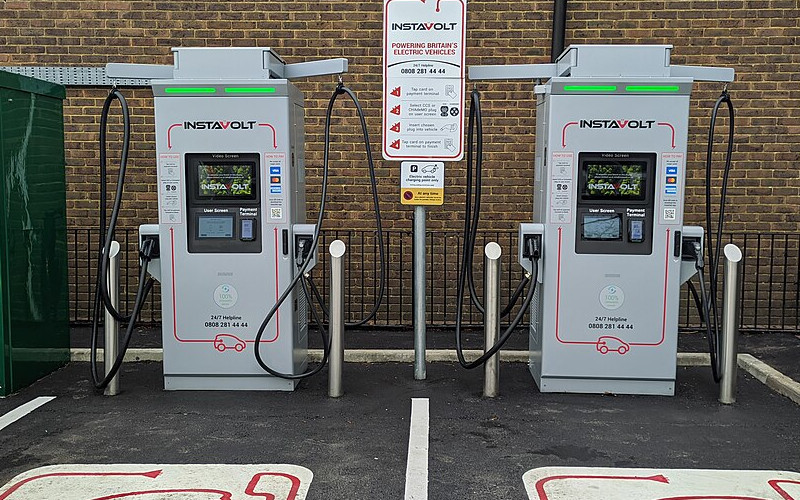
London boroughs account for eight of the 10 best-served areas for public electric vehicle (EV) charging in the UK, as new data reveals the number of chargers across the country has grown 13% in a year.
Hammersmith and Fulham tops the list with 1,470 chargers per 100,000 people, followed by Westminster at 1,369 and Tower Hamlets at 764, according to analysis of Department for Transport data by short-term insurance firm Tempcover.
There are now more than 116,000 public chargers in total across the UK, which Tempcover says equates to 168 per 100,000 people.
Short-term insurance expert Claire Wills-McKissick said: “While the growth in chargers is positive, the data also highlights a postcode lottery for EV infrastructure.
“With the 2030 deadline for ending the sale of new petrol and diesel cars fast approaching, the transition is now a countdown for most drivers.”
Coventry and Watford are the only two non-London local authorities in the top 10, with 705 chargers per 100,000 people and 649 per 100,000 people respectively.
When it comes to the nations of the UK as a whole, England leads on total number of chargers with 97,235 devices.
However, Scotland has the highest density with 218 chargers per 100,000 people and Wales takes the crown for fastest growth with total charger numbers rising 19% in a year.
Meanwhile, Northern Ireland has just 58 chargers per 100,000 people – around a quarter of Scotland’s charger density.
Within English regions outside the capital, Yorkshire and the Humber fares worst. Its highest-ranked local authority, North Yorkshire, records just 187 chargers per 100,000, with Leeds and York trailing at 127 and 122 respectively.
Wills-McKissick said: “It’s worth doing the groundwork now. Check the location and type of chargers near your home, workplace, and regular routes, and plan a few short trips to see how charging fits into your day-to-day life.“
The Government has confirmed new pure petrol and diesel cars will stop being sold from 2030, with all new cars and vans required to be fully zero-emission by 2035.
Image credit: OrangeStarling1997 via Wikimedia Commons (CC BY-SA 4.0)
.jpg)
Join the discussion