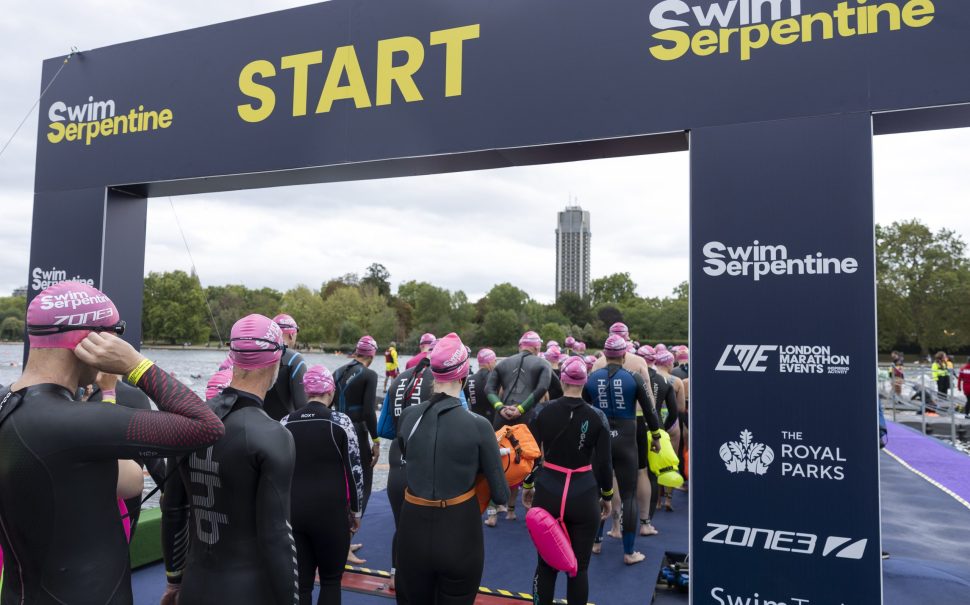
The UK’s most iconic open water swimming festival returned to Hyde Park for the ninth time last weekend.
More than four and a half thousand people took part in this year’s Swim Serpentine event, ranging from first-time swimmers to experienced competitors.
As well as providing a chance for people of all abilities to get involved with open water swimming, the event also had a massive community driven element, by having designated charity places for fundraisers.
Cassie Patten, who is an open water swimming Olympic bronze medallist from Beijing, has been involved with the festival since the beginning, and is now involved with giving safety briefings to swimmers before they enter the water.
She said: “I love the fact that it’s such a challenge to so many people. It’s their way of getting into open water and then they come back year on year.
“It feels more personable, but at the same the same time a mass participation event.”

A prominent aspect of the Swim Serpentine is the Charity Village, and this year they attracted a wide range of charities, using the festival to raise money and awareness for their causes.
One of the charities taking part was the Royal Hospital for Neuro-disability, with volunteer Isabel Barrett explaining they had nine swimmers involved, a couple of whom were wheelchair users.
She added: “A lot of them have a connection to the hospital whether that be through a family member or friend.”
Another charity new to the festival this year is the Inflammatory Breast Cancer Network UK, which had five swimmers taking part, raising up to £7000 for the charity.
Their chairwoman Naomi John, shared what participating in this event meant for her and the cause, as she returned to the water following 18 months of chemotherapy for breast cancer.
She said: “Just getting back into the water has been so restorative for my health, for my heart and for my head.”
Ben Craddock is the event lead for London Marathon Events, who organised Swim Serpentine, said the community support and engagement for Swim Serpentine is also increasing.
There were 900 charity places available, double that of the year before, to accommodate for the increase in mass charity participation.
Craddock added that Swim Serpentine was one of their most accessible events, with participants ranging from around 12 to 80 years old, across four different disciplines.
The four disciplines were the half-mile (805m), one-mile (1,609m), two-mile (3,219m) and Super Six, which consists of six one-mile laps.
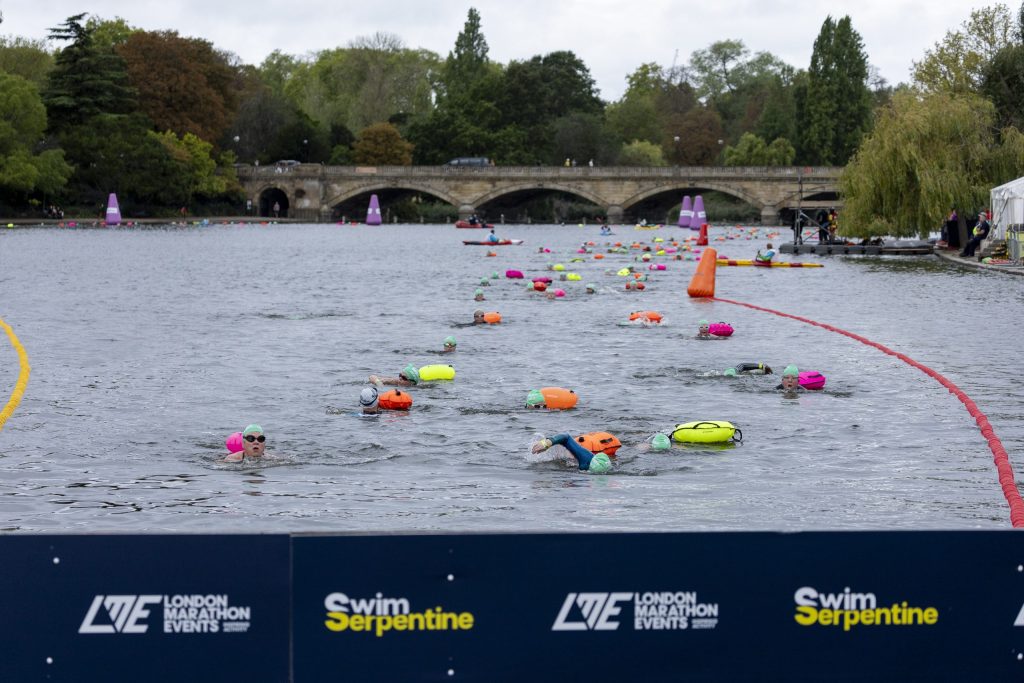
The festival has grown and evolved since its origin, as Craddock explained how it used to be a two-day event for the first couple of years, incorporating an elite element working with British Swimming.
The change to a single day event was fuelled by the growth of the London Classics – the London Marathon, RideLondon and Swim Serpentine – moving to a one day, larger-scale event.
But with the emerging popularity of the festival, so too has the focus on its environmental impact and organisers have introduced several measures to reduce its footprint.
These included used recycled zinc for the medals and using recyclable wetsuits. The event also promoted using green methods of transport to journey there.
Swim Serpentine looks set to remain a major fixture in London’s open-water swimming calendar. And is steadily growing in its support and engagement year on year.
Feature Image: Ian Walton for London Marathon Events.
Join the discussion