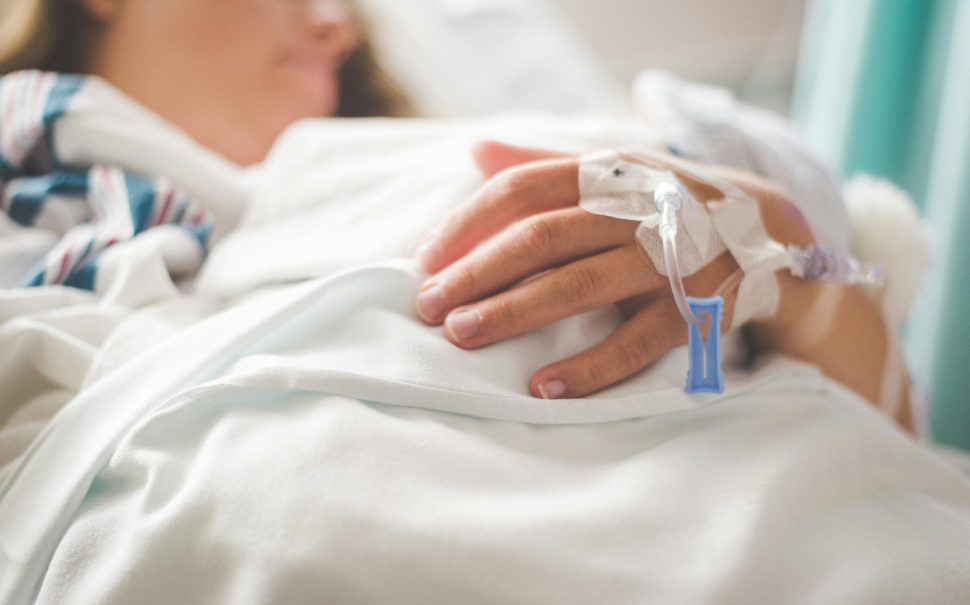
Eating disorder units across the UK are facing unprecedented demand, with referrals soaring 83% since before the pandemic.
New NHS figures reveal a post-COVID surge, with admissions rising 30% and referrals skyrocketing.
Units across London are struggling to cope, as some have seen demand double in the past five years, leaving critical patients waiting up to two years for treatment.
An eating disorder patient, Philippa said: “The human element of the NHS is dire. It is suffering. And I don’t know where all the money’s going.”
“You shouldn’t have to go through a waitlist 10 years long.”
“We’re seeing eating disorder services are becoming more and more underfunded. The concept of funding cuts is insane.”
“I don’t know what parallel universe I would be in right now if I didn’t have this service. It’s so important that it exists.”
Since March 2020, referrals to eating disorder services have climbed 83% nationally.
The sharpest increases are among adolescents, with child referrals nearly doubling since 2019/20—from 13,611 to 26,933, with the most recent figure for child referrals more than five times higher than the 2016 number.
Data from NHS England also revealed that eating disorder hospital admissions hit 4,498 in 2024/25, this represents a 30% jump since pre-Covid and more than double the number from a decade ago.
The numbers spiked during Covid, surpassing five and a half thousand in 2021/22 and have stayed around four and a half thousand for the last three financial years.
As referrals and admissions soar, services are struggling to keep up with demand.
Dr Julie Evans, Consultant Clinical Psychologist for North London, said services are still reeling from the post-COVID demand.
Dr Evans said: “We’ve definitely seen a sustained increase in referrals since COVID. We really are still very much seeing the impact of that.”
Nowhere is the strain more evident than in London.
North East London NHS Trust saw referrals almost double, from 1,845 to 3,631, accounting for 6% of all UK referrals in 2024/25.
The trust currently has 161 patients waiting for treatment and recorded a 98-week maximum wait.
Central London’s eating disorder unit experienced a doubling in referrals, from 1,484 to 2,880, and now has 322 patients on its waiting list, with some waits reaching 97 weeks.
But the trust that saw the largest increase was East London, with a staggering 146% increase, from 554 to 1363 cases.
Across the London trusts that supplied data, the average rise in referrals since before the pandemic was 81%.
Dr Evans explained how the conditions of the pandemic made eating disorders more likely to develop.
She said: “One of the main functions of the disorder can be a feeling of control and during COVID, we had so little control over many things in our lives.
“People were feeling very anxious, very scared, very upset. People were losing family.
“And in order to cope with that, they needed something. So I think a lot of people turned to food or exercise as a way of managing that.”
Across London, patients are waiting longer than ever for urgent treatment — especially children and young people.
Guidance issued by the All-Party Parliamentary Group in 2015 stated that children and young people should start treatment within four weeks for non-urgent referrals, or within one week if the case is urgent.
But, ten years on, services are still missing these targets by months — in some cases, years.
Some waiting times in London have reached up to 98 weeks for urgent child cases.
Dr Evans said: “We know that eating disorders in particular tend to develop in younger people, you know, kind of late teens, early 20s.
“So that’s a really critical time to be getting treatment for people as quickly as possible.”
She added: “We are still coping with the impact of the increase without much increase in funding, if any, in most circumstances.
“So we do have, unfortunately, long waiting lists.”
The government has said they increased funding for children’s eating disorder services each year, from £46.7 million in 2017/18 to a planned spend of £101 million in 2024/25.
However, the Royal College of Psychiatrists revealed that in practice, services have faced changes that could have amounted to more than £835,000 in spending cuts.
Featured image: Stephen Andrews, via UnSplash

Join the discussion