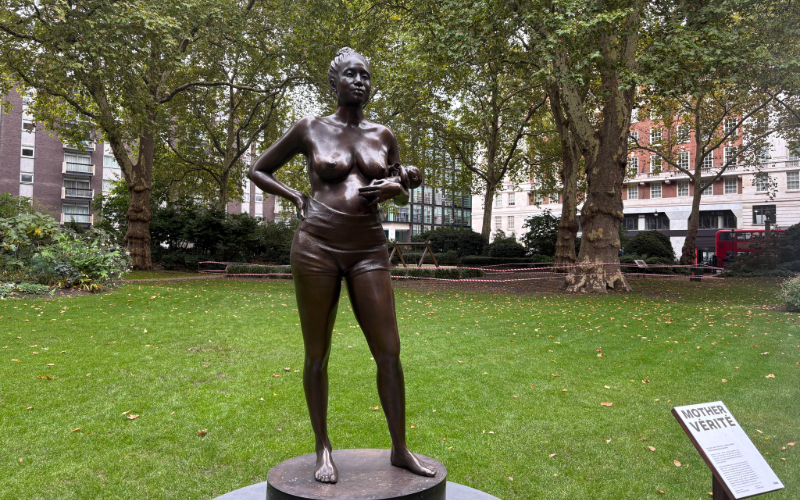
London’s first statue depicting a post-partum woman is continuing its international showcase after appearing at Art Basel Miami Beach, drawing attention to the lack of similar representation in the capital’s public monuments.
Western art has long idealised the female body, but, cast in bronze and standing seven feet tall, Mother Vérité presents a starkly different image.
Her breasts are engorged and uneven with cracked nipples, wearing only disposable post-partum underwear, half-covering a swollen belly as she cradles her newborn in her left arm.
It depicts the physical aftermath of birth, a subject rarely represented in public sculpture.
Its unveiling outside the Lindo Wing at St Mary’s Hospital in Paddington stood in contrast to the carefully staged royal birth announcements long associated with the hospital.
In London, women account for less than 4% of public statues, outnumbered even by animals.
Recent additions, including statues of Twiggy, Ada Lovelace and Joy Battick have begun to rebalance representation, but this work goes further, challenging not only who is depicted, but how.
Among those who have visited Mother Vérité is Cherie Blair, barrister and long-time women’s rights advocate.
She said: “I believe visibility is the first step towards justice. When we allow women’s real lives to be seen, we are forced to reckon with how society supports – or fails to support – them.”
“If young women and girls see this, they may recognise that their bodies and their experiences are worthy of respect and visibility. And perhaps they will also see that women’s realities belong in public spaces – not hidden away.”
“So much of women’s experience is sanitised, sexualised or ignored. This statue does the opposite – it tells the truth, unapologetically. This statue is not just art, it’s a statement of dignity.”
The sculpture was created by artist Rayvenn Shaleigha D’Clark who visited 40 post-partum women in their homes to create 3D scans and live casts.
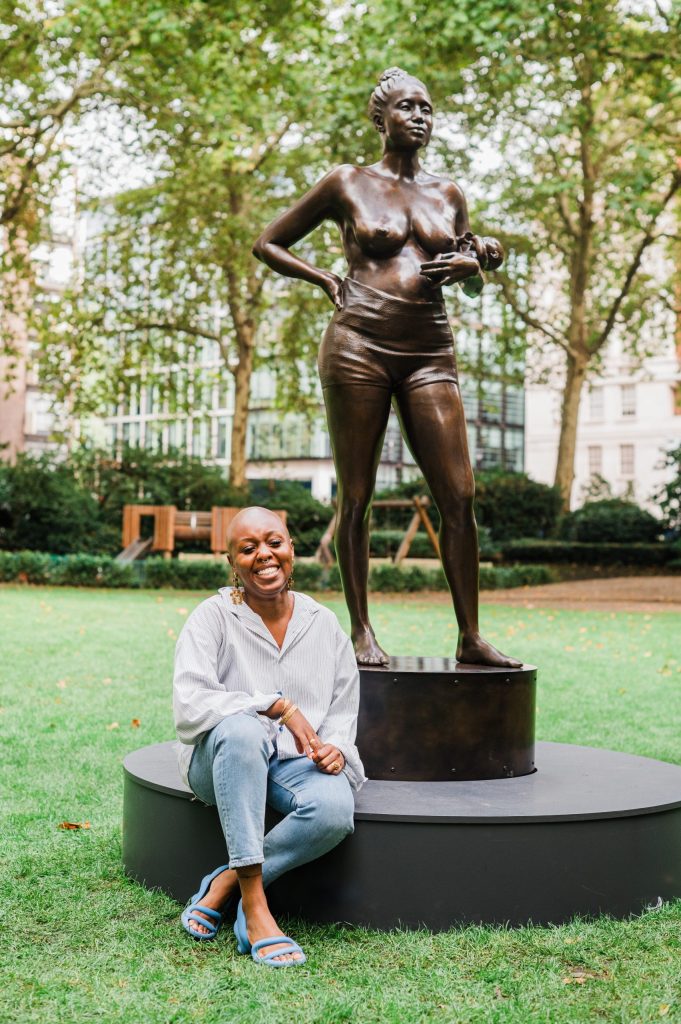
Testimonies from more than 400 women about their post-partum experiences were gathered to further shape the final image.
Instead of portraying one person, the statue blends elements from many women’s bodies and experiences into a single figure.
Rayvenn Shaleigha D’Clark, who created the sculpture, said: “I love working with that kind of ambiguity. We wanted a wider entry point for everyone to see themselves within it and to enter into the project.
“If one woman feels less alone throughout their motherhood journey or can reflect more positively on their journey, then I feel that, in that respect, my work as an artist is done.”
After the statue was unveiled online, it sparked debate over its level of nudity, with some commentators, as shown by The Female Lead, speculating that it had been created by a man and shaped by the male gaze.
But D’Clark explained that after discussing the reaction with MTArt Agency founder and CEO Marine Tanguy, they chose not to halt the project in response to public criticism.
D’Clark said: “It’s really for the individual to unpack their position within the male gaze because I personally don’t see a woman’s chest as being inherently sexy or inherently anything.”
D’Clark worked closely with Tanguy, who led a research paper for UCL on how public art shapes public debate.
Tanguy, who serves as a Special Advisor for UN Women UK, was herself post-partum during the statue’s creation and was determined to site the art in Westminster, among monuments largely dedicated to war heroes and politicians.
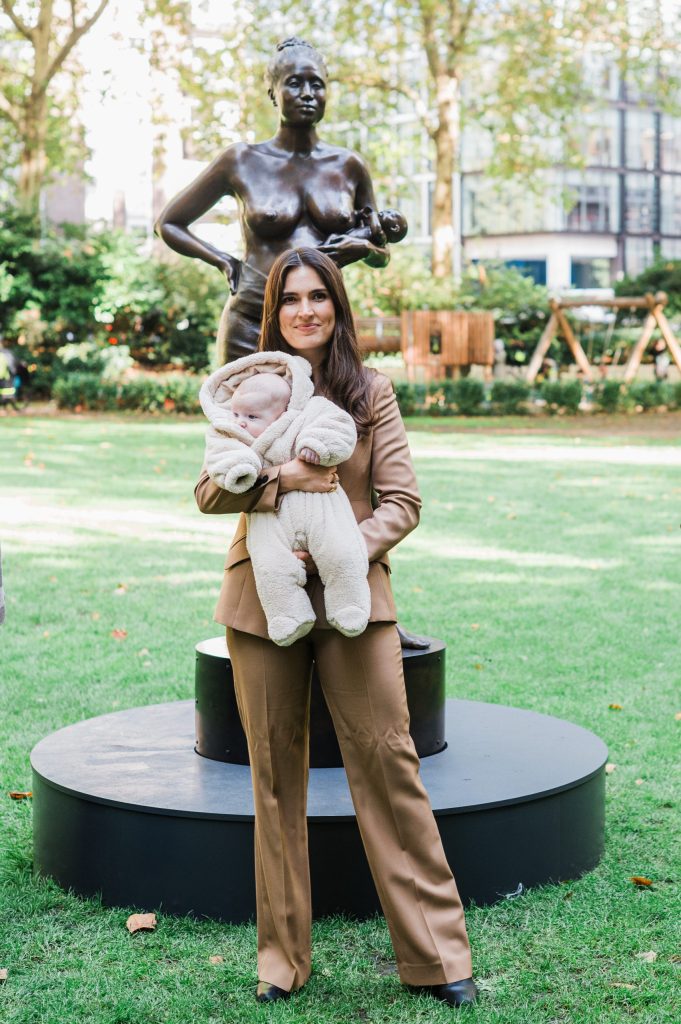
Tanguy said: “Women are put on a pedestal, they give birth and then suddenly, it’s all about the baby.”
She added that public art can challenge dominant narratives by questioning who is represented in cities and who gets to shape them.
Tanguy said: “Public art is more than aesthetic contribution, it’s a vital instrument of democratic expression and social change.
“They become platforms for engagement – inviting reflection on collective histories, values and future aspirations.”
D’Clark added: “We didn’t want to do ourselves an injustice by not also using that same material – bronze having a legacy and a hierarchy that really put those artworks and sculptures on pedestals.”
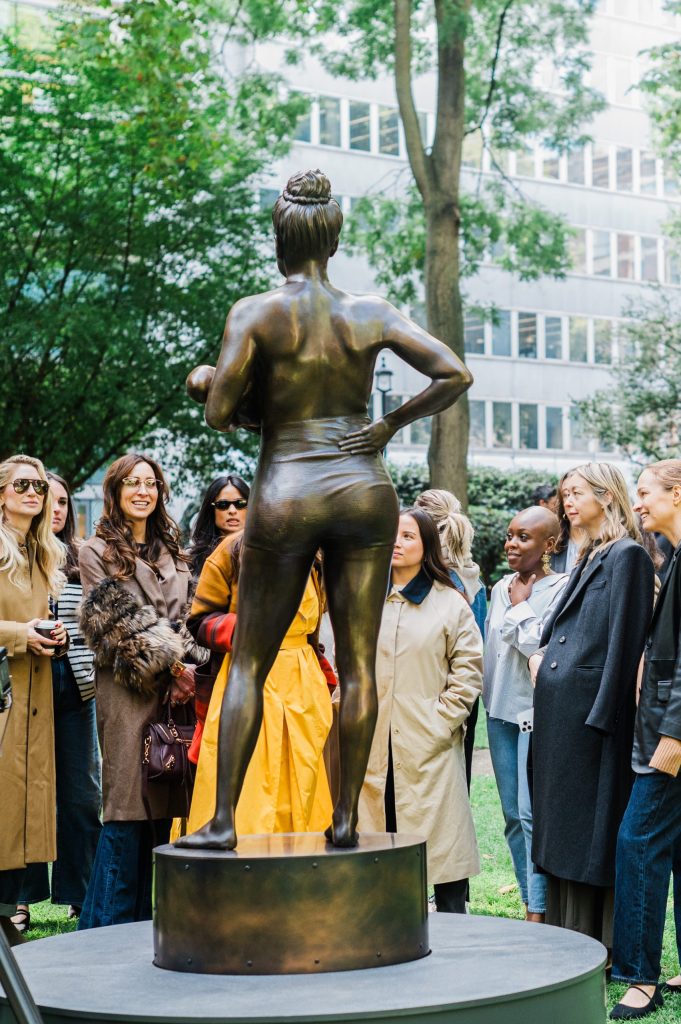
Noting the positive reception from visitors Tanguy said: “It’s a really welcome awareness from both genders. I think letting men into that world more is only going to be positive.”
Its symbolism is rooted in motherhood, but its impact extends beyond gender.
Research suggests 8-10% of fathers experience post-partum depression (PPD), rising significantly when their partner is also affected.
The statue was commissioned by post-partum care brand Frida Mom, known for campaigns that have faced advertising bans for showing post-partum bodies and using words like ‘vagina’.
After discussions with the brand, Tanguy thought: “If we suddenly put post-partum on a pedestal and make something that all women go through, something we celebrate and they feel seen and heard through that, that will be a real change historically.”
Frida founder Chelsea Hirschhorn said: “Frida has long fought to break the silence around women’s health and this statue continues that mission – putting mothers on the pedestal they deserve.”
The installation has added to wider debate in London about who is commemorated in public spaces and how women’s bodies and experiences are represented on the capital’s streets.
Featured image credit: Gemma Hamilton

Join the discussion