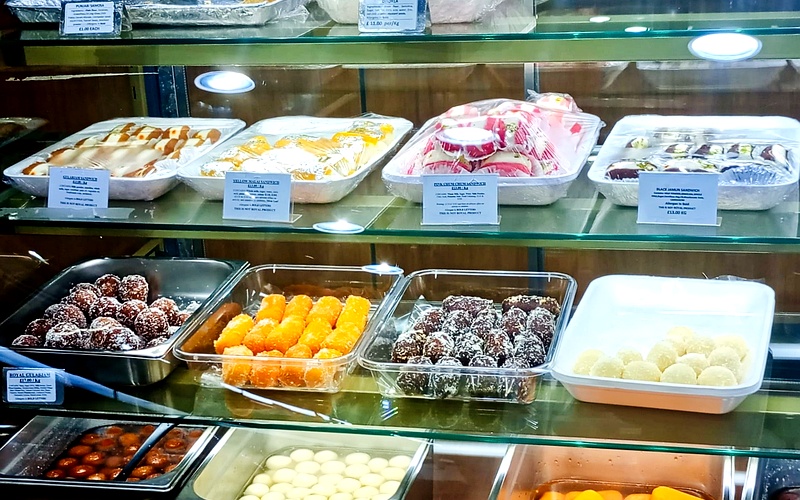
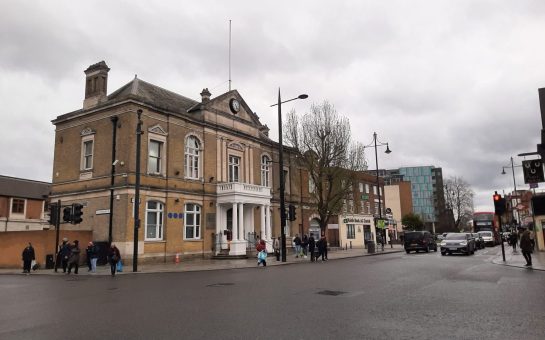
Southall Broadway is a street defined by its food. Sweets like jalebi — a deep-fried Indian confection soaked in sugar syrup — line the shop windows.
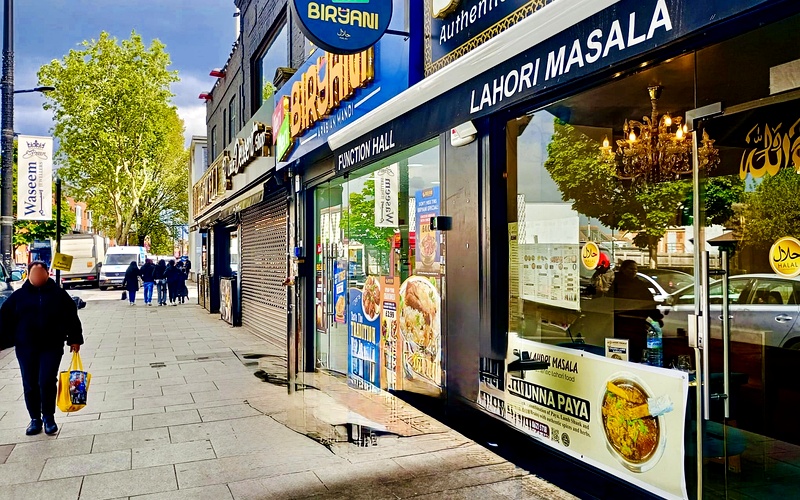
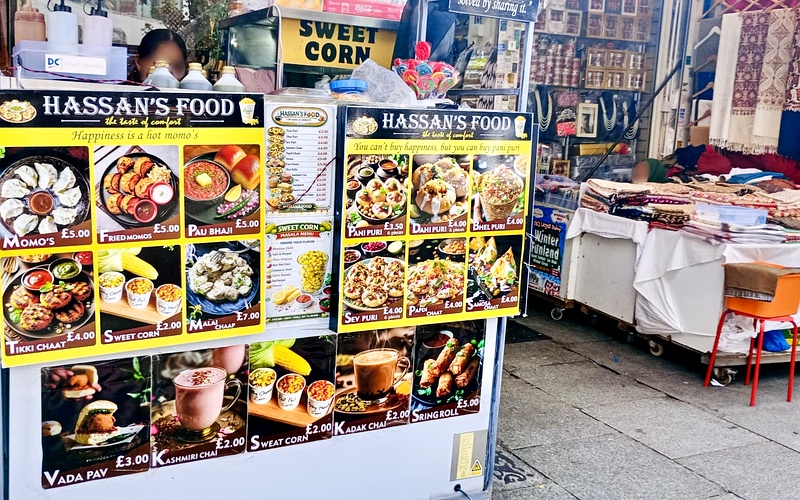
The scent of chaat, a savoury street snack, drifts from market stalls. Of the 90 food businesses on the high street, 22 are sweet shops, dessert bars or snack counters.
There is no major supermarket. There are nine places to buy fresh meat, fish or vegetables.
The health data is striking.
One in seven adults registered at a local GP practice has Type 2 diabetes — nearly double the national rate.
Clinicians say the condition is showing no signs of abating, and that intervention is coming too late, well after the disease has taken hold.

A community at risk
Dr Onkar Sahota, a GP and former London Assembly Member, has practised in Southall for 35 years and has seen diabetes rates rise throughout his career.
The community he serves is one of the most South Asian in the country — the 2021 Census recorded 40.4% of residents as Asian, against a national average of 9.3%, and Southall Broadway ward had the lowest proportion of white British residents of anywhere in the UK.
British South Asians are up to six times more likely to develop Type 2 diabetes than white Europeans, with South Asian bodies more susceptible to insulin resistance and difficulties processing glucose.
At one surgery — Lady Margaret Road Medical Centre — one in five patients is diabetic.
Dr Sahota said: “The real issue here is the South Asian community does have a preponderance to diabetes compared to the UK population.
“We have a genetic susceptibility, and probably it’s been tested more because here we have a rich environment. We have obesity also.”
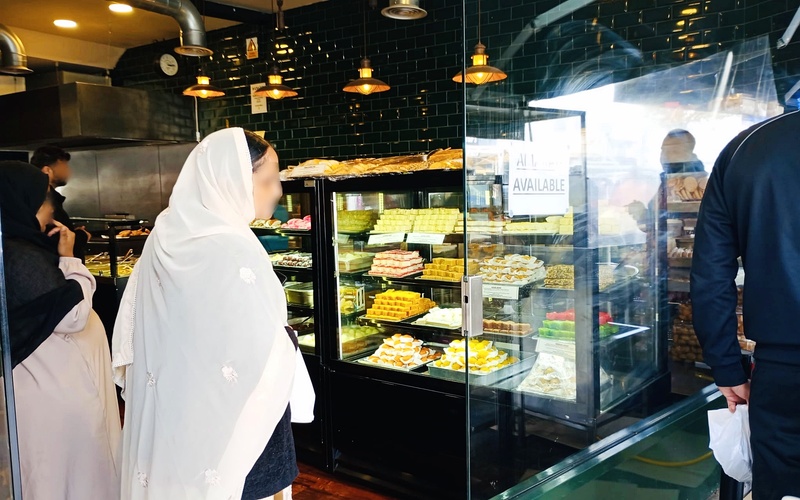
A street of sweet shops
The Broadway itself is only part of the story.
The effect of Southall’s food environment has built up slowly, quietly, over decades.
Across the wider UB1 and UB2 postcode areas, just three of 487 food businesses are supermarkets — 0.6% of the total.
In Wembley and Tooting — two comparable London high streets with significant South Asian communities — the figures are 17.3% and 2.4% respectively.
Angela Fonso, a Southall community campaigner, said the closure of the area’s last major supermarket — Lidl — left many residents without viable options.
Fonso said: “It’s an issue for people who are disadvantaged and don’t have access to a car, because the nearest supermarkets are in Hayes. The reality is visible every day.
“So many people, with their little shopping trolleys and having to manage crowded buses. That’s also a reflection of the socioeconomic disadvantage.”
Hayes & Harlington is two miles away, a 15-minute bus journey for those who can afford the fare.
No budget, no plan
Against this backdrop, Ealing Council confirmed that it has no dedicated public health budget for diabetes prevention targeting Southall or South Asian communities.
The only programme identified by the council was Let’s Go Southall, a general physical activity initiative that is not diabetes-specific and does not directly address diet, diagnosis, medication or the local food environment.
The NHS Diabetes Prevention Programme does exist nationally, and Southall GPs refer patients to it — but Dr Sahota said uptake remains poor, with only around 30% of those referred actually engaging with it.
In communities that have felt underserved for years, persuading people to engage with health programmes is not straightforward.
Dr Sahota said the absence of targeted local investment stands in stark contrast to the scale of need in Southall.
He added: “The real question here is, you have a local authority who doesn’t have any budget, despite having a higher burden of population, to address that.”
Planning failures
The same pattern is visible in Ealing’s planning decisions, as the council has consistently approved planning proposals for new restaurants and takeaways on Southall Broadway since 2010, with no cumulative impact restrictions applied.
Fonso said a fast food serving hatch called Bunchies, on Montague Waye, was granted planning permission despite being 192 metres from a local secondary school — well within the distance at which the London Plan, since 2018, proposes new hot food takeaways should be prohibited.
She added: “Ealing Council should not have given planning permission to that business. It went against their own policy on the opening of fast food takeaways near schools.”
She also claimed the business was promoted on TikTok using a schoolchild to sample and endorse the food.
When Fonso submitted a formal complaint last May, the chief executive’s office confirmed six months later that planning had still not responded.
The site has since closed and reopened as a juice bar.
Ealing has not adopted a supplementary planning document specifically governing hot food takeaways — despite comparable London boroughs including Waltham Forest having done so.
Research published in Perspectives in Public Health found councils without an adopted local policy are significantly more likely to lose planning appeals — meaning fast food outlets they try to block can still be built.
Living with diabetes
Data obtained from the NHS Business Services Authority through an FOI response showed Metformin — the most commonly prescribed drug for Type 2 diabetes — was dispensed more than a fifth more often across 24 pharmacies in UB1 and UB2 in 2025 than in 2019, rising from 187,524 to 227,280 items.
Dr Sahota said: “It probably has increased because we were making more diagnoses and trying to get tighter control.”

Behind those figures are people like a 58-year-old woman who has lived in Southall for nearly 20 years.
She ignored worsening symptoms for months.
She said: “I had excessive thirst, and I struggled to go out without needing the toilet. Even in a restaurant, I had to keep rushing to the toilet.
“I ignored the symptoms for quite some time until it got to the point I thought, I can’t manage.”
Eventually she was struggling to leave the house or get to work and a fingerprick test at her GP surgery showed dangerously high glucose levels.
She was referred to Ealing Hospital, diagnosed with Type 2 diabetes in 2016, taught to inject insulin and prescribed Metformin.
At the time her vision was blurred.
She managed her condition well for years and joined an online low-carbohydrate programme that transformed her blood sugar levels.
But towards the end of last year she drifted from those habits.
She said: “That really made a difference, massively. Because before that, I was eating lots of bread, rice, and cereal.
“But then I just fell off the bandwagon and didn’t care about myself. I was in denial. I shouldn’t have been — because it is in my family.”
She is now on Mounjaro — an injectable drug that mimics hormones involved in blood sugar control, known as a GLP-1/GIP receptor agonist — after being referred back by a diabetic nurse, and is walking daily.
She concluded: “By controlling my diet and going out for walks, I’m starting to feel a lot better.”
The next generation
For many residents in Southall, managing diabetes is now part of daily life, but community campaigners warn the burden is already being carried by younger generations.
Fonso, who also works as a teaching assistant, said: “In 20, 30 years’ time, there’s going to be more children, now adults, with diabetes. Living in an environment where the terrible food choices are screaming out at them. And that includes my own children.”
Health researchers have long argued that excellence without equity is the chief human rights problem of twenty-first century medicine.
In Southall, that argument has a postcode.
Dr Sahota said many in the community have come to see diabetes as an inevitable part of life.
He added: “They’ve made peace with it. They think it’s part of life. But this is preventable. It’s not inevitable. And you can do something about it.”
Ealing Council did not respond to a request for comment.
All images: AF

Join the discussion