
For one of the first times on record, more people will die than be born in the UK.
The Office for National Statistics reports this shift is likely permanent.
As the nation grapples with this demographic crossover, a pressing question emerges: why is this happening, and are we ‘penalising parenthood’?
The motherhood penalty
Joeli Brearley MBE is an activist, author, and public speaker specialising in parental rights who popularised the term ‘motherhood penalty’ – closely linked to the gender pay gap.
Or as she called it, a “financial cliff that women fall off because they dare to procreate”.
In 2025, the ONS also released eye-watering data on the financial implications of motherhood.
It showed mothers lose an average of £65,618 in the following five years of their first child.
For a second and third child, they lose an additional £26,317 and £32,456 respectively.
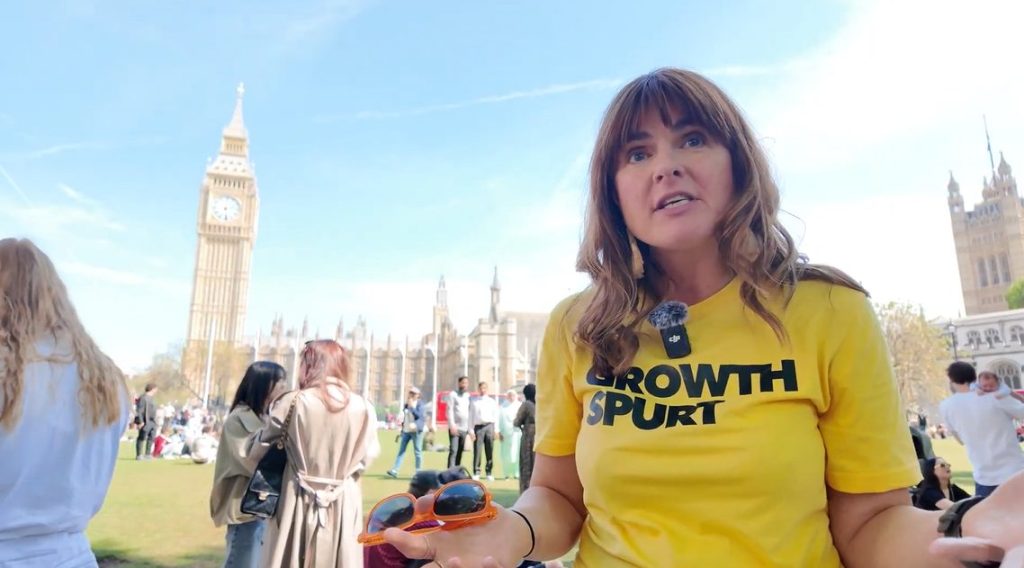
Brearley said: “We do not give parents the support they need at all.
“It is critical we create an environment where it is possible to share the care, otherwise we will continue to see the birth rate plummet.”
She cited maternity discrimination, a lack of affordable childcare, inadequate parental leave, and a lack of flexible working as key challenges.
Pressure groups across the UK have been calling for improvements to the country’s parental leave.
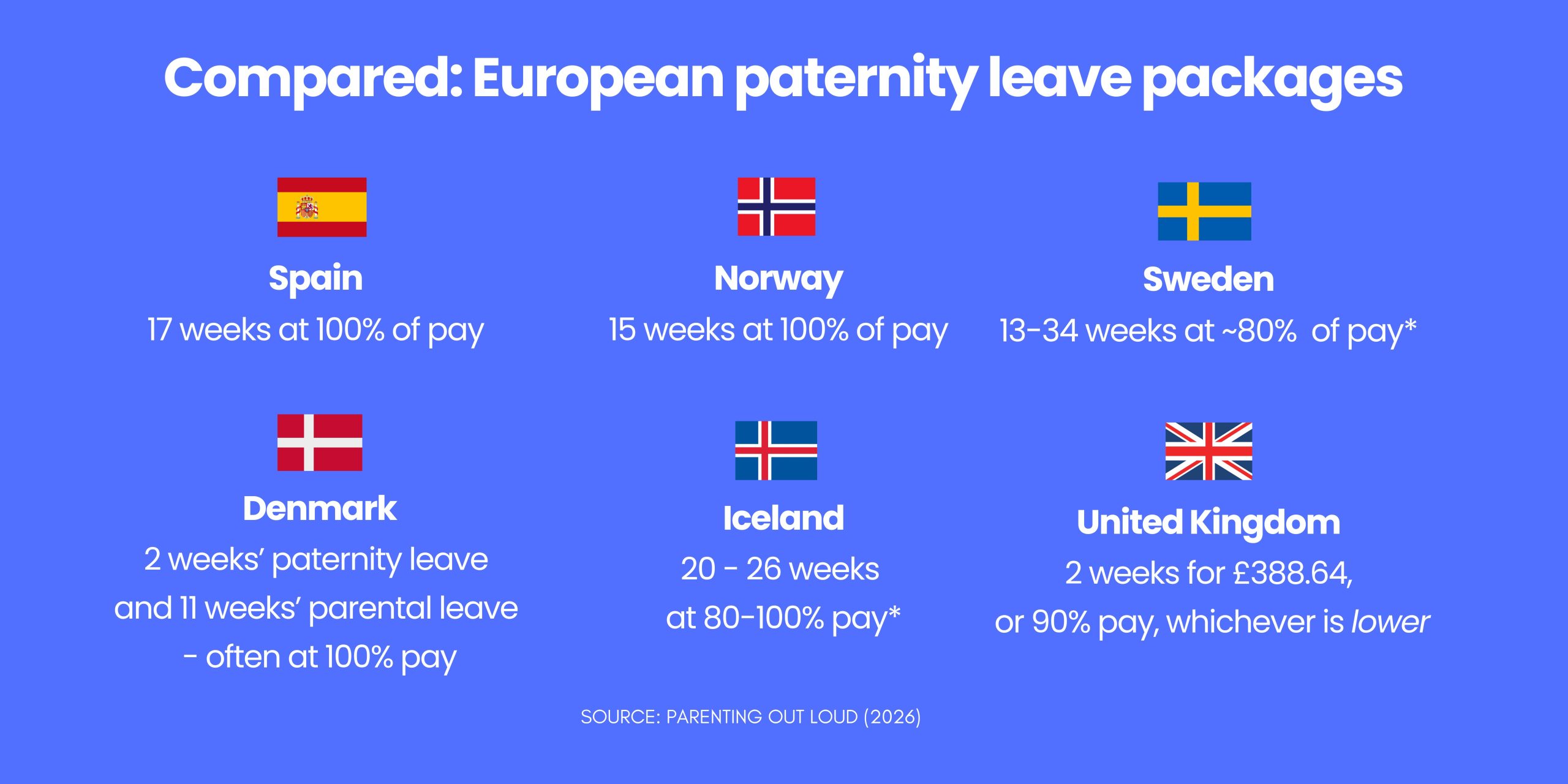
At present, the UK has the lowest statutory paternity pay in Europe, with fathers afforded just two weeks of statutory leave and paid a total of £388.64.
This is less than half of the UK’s minimum wage.
Ellie, 39, is a full-time home educator, artist and mother who married at 22 years old and had a child in her mid-20s.
She said: “The UK has increasingly become a very hostile place to be for mothers.
“I think a lot of European countries get it right. The paternity leave is awful in the UK, it’s better than in America, but it’s still a drop in the ocean.”
Mental load
Ellie had no shortage of loving things to say about her child and motherhood, but claims it was a “complete baptism of fire” to have a baby.
She added: “I really do think a lot of social programming exists to encourage us to have children.
“I wish I had been older when I had a child.”
Ellie also cited the mental load of parenting and the need for equal support.
In one study, women ranked ‘having a supportive partner’ as their number one priority in family planning, exceeding any mention of housing and finances.
They were willing to sacrifice at least seven fertile years to achieve this goal.
London’s fertility rates
Zeroing in on Greater London, the fertility rate was 1.35 live births per woman in 2024, which is marginally less than the average for England and Wales in the same year (1.4).
For context, both numbers are far below the natural replacement rate of 2.1 births per woman, which the UK fell below in 1973, and has underperformed since.
While variations do exist between London boroughs, they are not as clear cut as they seem.
Barking and Dagenham has the highest rate in the city, and (excluding City of London due to its population) Islington the lowest.
Generally, people flock to the outskirts of London and beyond to have a family, which is reflected in the data, showing outer London boroughs such as Redbridge and Hillingdon having much higher rates than inner London boroughs like Westminster and Camden.
One thing is for certain: London is set to change. This is down to one very related factor; an ageing population.
Greater London Authority data below provides a sobering image, as the number of 70-89-year-olds in Greater London is set to increase by an astonishing 176%.
An increase of age is not inherently a bad thing but the challenge lies when this is combined with a plummeting birth rate.
There will be less young people to care for an aging population, and less people by comparison to fund the NHS.
London is also a densely populated city and average age of Londoners tends to be lower than the UK average.
So, these issues will also be even more pronounced in the UK’s rural areas – where the average age is higher.
A lower London birth rate will also mean a reduction in demand for school places.
This year, London Councils already forecast a £45 million deficit in school budgets by 2030 – citing a dropping birth rate as a key driver.
In rural areas especially, this will force schools to merge or even close, says Jakub Bijak – Professor of Demographic Science at The University of Oxford.
Is the UK an outlier – and why are birth rates falling?
Globally, the birth rate has plummeted, as ‘live births per woman’ have more than halved in the last 70 years worldwide, meaning the UK is far from an outlier.
Bijak explained how this is even a problem in areas such as Scandanavia, which have strong Government support to parents.
He said: “The Nordics were often the shining beacon to maintain high fertility rates, with state support, subsidised childcare and maternity and paternity leave.
“But a few years ago, fertility rates began to drop everywhere. Part of it is economics, housing is a massive problem – everywhere.”
Bijak said demographers are considering everything – including economic uncertainty, income precarity and the disappearance of career-long jobs.
Even migration – hotly debated in the UK – is not enough to sustain the UK.
“While migration makes a lot of difference in the short term, fertility is the only game in town,” said Bijak.
There have been debates about fecundity – the ability of people to procreate.
However, demographer Paul Morland said: “Generally, there is no evidence that the average couple is having trouble getting pregnant.”
Both Morland and Bijak agreed that it is having children later in life that is a critical factor as age-related fertility and life circumstances then impact the number of children a person has.
Bijak also said there has been a shift in cultural norms.
The decision not to have children
Nadia Idle, 45, is a lecturer and a communication strategist, who doesn’t have and doesn’t want children.
She said “I love other people’s kids, I just don’t want them myself. I don’t see it as a ‘decision’, it just doesn’t feel right for me.
“Of the friends I have who don’t have children by choice, it’s nothing to do with economics.
“It’s just, it’s not for them, if anything, it’s about life and bodily autonomy.”
On pronatalism, Idle said: “The idea that anybody would interfere in the space like having a child – that is so personal. It is unacceptable.
“On a social level, there is an intrinsic unconscious belief – driven by conservatives – that a woman’s life is about childbearing and about sacrifice. And that, I object to.
“Usually, the people who are interested in pronatalism are not interested in providing the right care for mothers.”
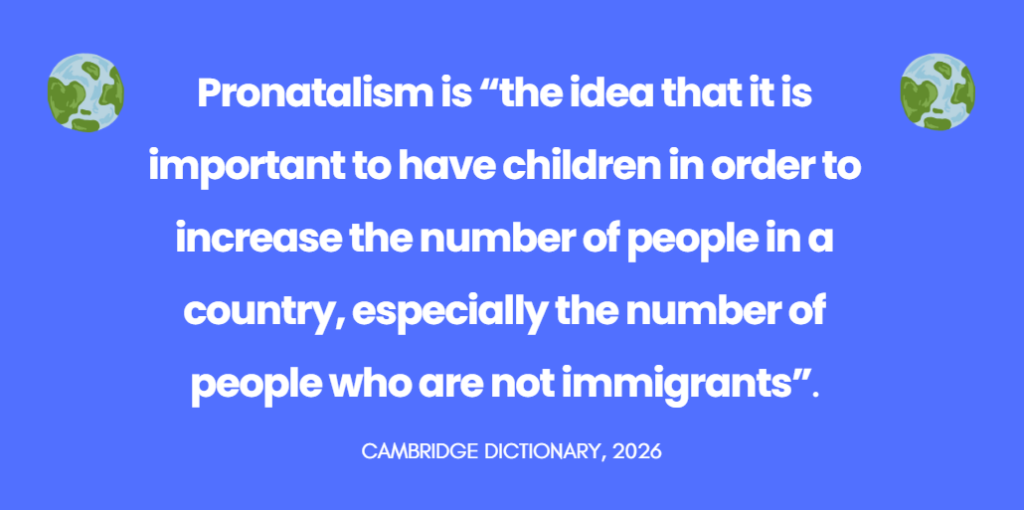
Right-wing commentator Matt Goodwin recently shared his opinion on birth rates.
The Reform Party member said “young girls and women” need a “biological reality” check on fertility.
He also said in an earlier video that people who don’t have children should pay more tax.
Goodwin was approached for comment several times, but did not reply.
Bijak said: “When it comes to pro-natalist policies, it has been shown time and again that they don’t work.”
Whether we take Hungary’s Viktor Orban, or Romanian dictator Nicolae Ceaușescu, Bijak said “draconian carrots and sticks” make no measurable difference to birth rates in the long run.
Goodwin also made no mention of how this would impact the millions of UK citizens who are having troubles conceiving.
The path forward
On birth rates, there is little agreement about the path forward. One thing is for certain; change is afoot.
In 2021, South Korea began to see more sales of incontinence underwear than children’s nappies.
With an aging population, this change seems inevitable in London and beyond.
Morland concluded: “It’s going to be incredibly painful to manage the transition in birth rates going forward.”




Join the discussion