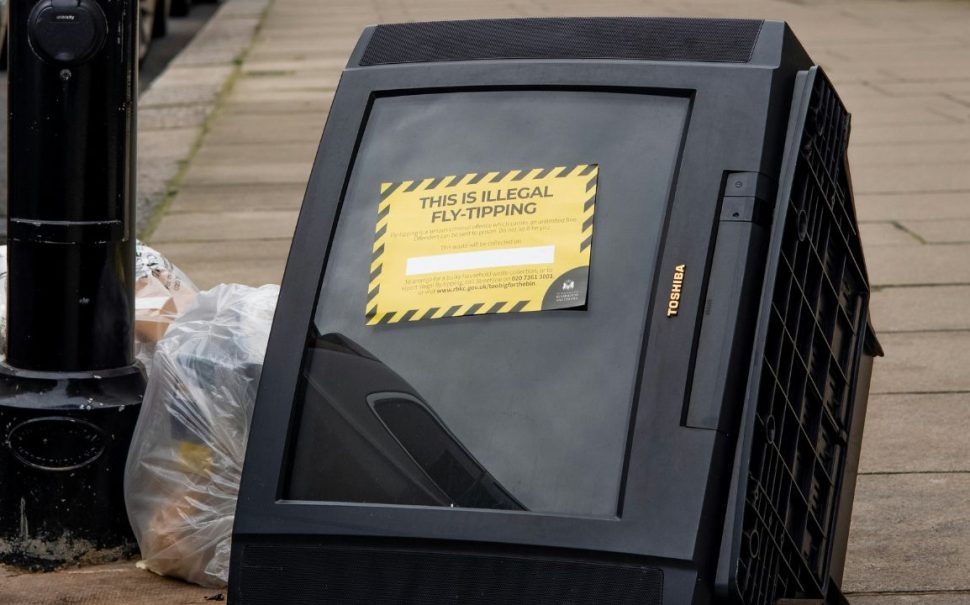
The enforcement of fly-tipping related offences increased across London last year, with nearly 50,000 fixed penalty notices (FPNs) issued by local authorities in 2024/25.
The amount of FPNs issued for fly-tipping across London rose to 49,915 – an increase of 25% compared to the previous year where 39,781 FPNs were issued for offences including fly-tipping, household duty of care and littering in conjunction with fly-tipping.
Ealing saw the highest number of FPNs issued specifically for fly-tipping in 24/25 – with 1,993 issued out of 12,339 across London, the data from the Department for Environment, Food and Rural Affairs (Defra) shows.
It comes as recent government guidance urged councils to post footage of people illegally dumping waste and ‘name and shame’ those involved on social media in an effort to crack down on fly-tipping.
Ealing resident Teresa said: “Whilst all these measures should be applauded, there still needs to be greater public awareness of the public health risks, threats to wildlife and spiralling costs of fly-tipping.
“Maybe the installation of CCTV cameras in hot-spot areas or the threat of confiscating vehicles needs to be considered for repeat offenders.
“Keeping the borough of Ealing clean and thriving, should be a collective responsibility – not just of the council but of all its residents and every individual.
“Unfortunately – having to witness the deterioration of Ealing’s streets and pavements – it seems it lost its crown of ‘Queen of the Suburbs’ many decades ago.”
Newham accounted for 29% of the FPNs issued for all fly-tipping related offences across London – with 14,502 issued in the year, marking a 834% increase on the amount of FPNs issued by the council in 23/24.
In Newham, there were 73.73 FPNs issued per 1000 people – compared to the London average of 5.49 issued per 1000 people.
Following Newham, the highest number of total FPNs issued were in Enfield (4,721), Brent (3655), Waltham Forest (2,755) and Westminster (2,522).
Ealing was the sixth highest borough for total FPNs issued for all fly-tipping related offences with 2,429 – compared to an average of 1,513 across London.
A spokesperson from Ealing Council said: “Fly-tipping is a drain on council funds which would be better spent on services for residents and has a direct impact on the environment and quality of life.
“We have more than doubled fly-tipping fines from £400 to £1,000, since last year, to send a clear message – illegal waste dumping will not be tolerated.
“We are pleased to see a significant increase in fines being issued with 161 in May 2025 to 501 in April 2026 which is a 211% increase, showing our efforts to catch offenders.”
The council believes that the higher reporting of fly-tipping in the borough is also down to an increasing number of residents using reporting apps to log incidents.
In Ealing and Newham, the Love Clean Streets app allows residents to report fly tipping and other environmental issues directly to the local authority.
Founder of Love Clean Streets Ian Blackburn said: “Better reporting gives councils greater visibility of problems in their communities, helping them identify hotspots, respond more quickly and build a clearer picture of local environmental issues.
“Community reporting is not a substitute for enforcement, but it can provide valuable intelligence that supports council operations and helps ensure incidents are recorded and acted upon efficiently.”
Enfield had the highest prosecution costs across London, spending £61,420 to prosecute those who hadn’t paid the fixed penalty notice.
In one incident, an Enfield resident was caught dumping a household item on mobile waste enforcement cameras on 17 July 2024.
The illegal fly-tipper was sent a letter and contacted by the council’s waste enforcement team but failed to pay the fine.
In 2025, the resident was later picked up on a warrant, pleaded guilty to the charge and ordered to pay a fine of £475, the Council’s costs of £1,352 and a victim surcharge of £140.
Cabinet Member for Transport and Waste at Enfield Council, Cllr Rick Jewell, said in January: “The defendant in this case has shown a blatant disregard for the council and the law by thinking he could dump his waste on our streets and get away with it.
“We have a zero-tolerance policy on fly tipping in Enfield. We offer all residents a free bulky waste doorstep collection and provide two facilities for the disposal of household waste at Barrowell Green and Edmonton Eco Park.”
Across London, clearance costs for significant and multiple loads of fly-tipped waste amounted to almost three million pounds – with Barking and Dagenham alone paying more than a million.
Overall, the amount spent across London on clearance costs for significant and multiple loads of fly-tipped waste rose by 31% from £2,282,459.00 in 23/24.
With 53,268 fly-tipping incidents reported, Croydon was the second highest borough for fly-tipping incidents per 1,000 people at 130.13 but had the third lowest number of FPNs issued per 1,000 people across London at 0.06.
Speaking to the BBC, Tony Hooker from the campaign group Litter Free Norbury in Croydon said: “We also need more enforcement – there’s virtually been zero fixed penalty notices for any kind of fly-tipping or littering offences.
“So it’s gone on for a long time and then it becomes engrained, it’s become endemic that people think ‘I can just put it out, and it gets taken away’.”
In March, the government released their Waste Crime Action Plan where the Environment Agency set out how it will act earlier to address illegal activity and deliver more consistent enforcement action.
Featured image: theblowup on Unsplash



Join the discussion