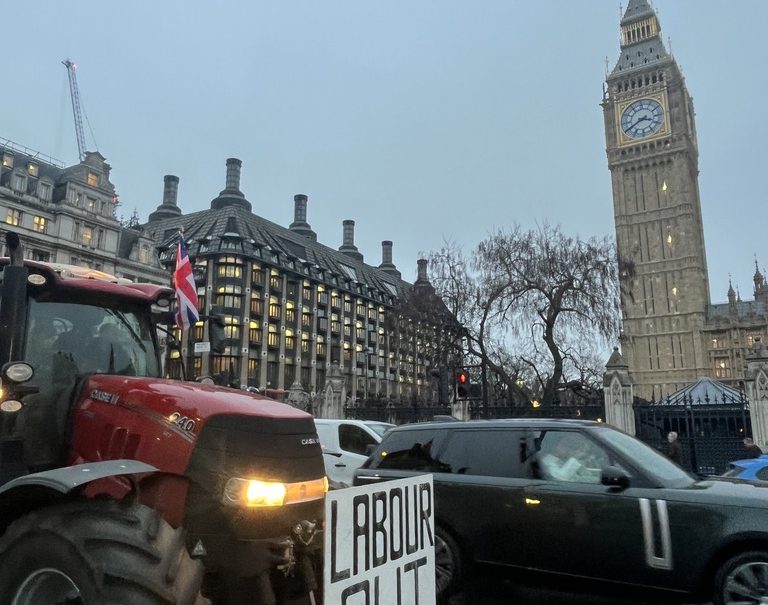
UK farmers drove over a dozen tractors to Parliament Square on Tuesday to protest inheritance tax during the Finance Bill’s second reading in the Commons.
Farmers protest inheritance tax
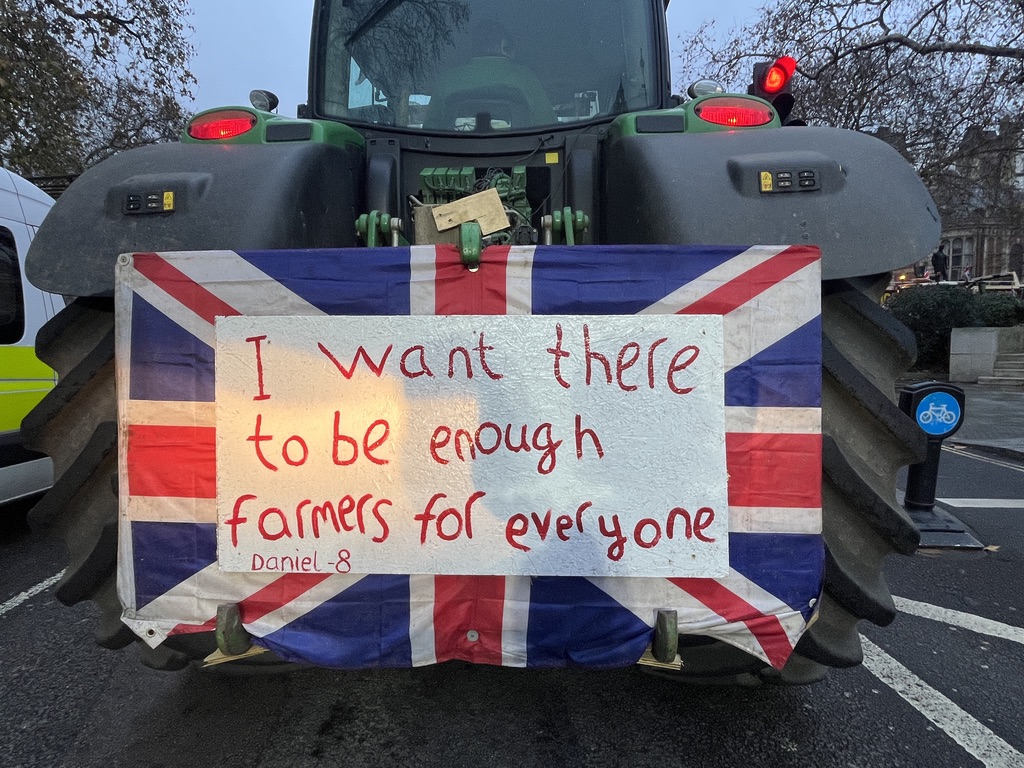
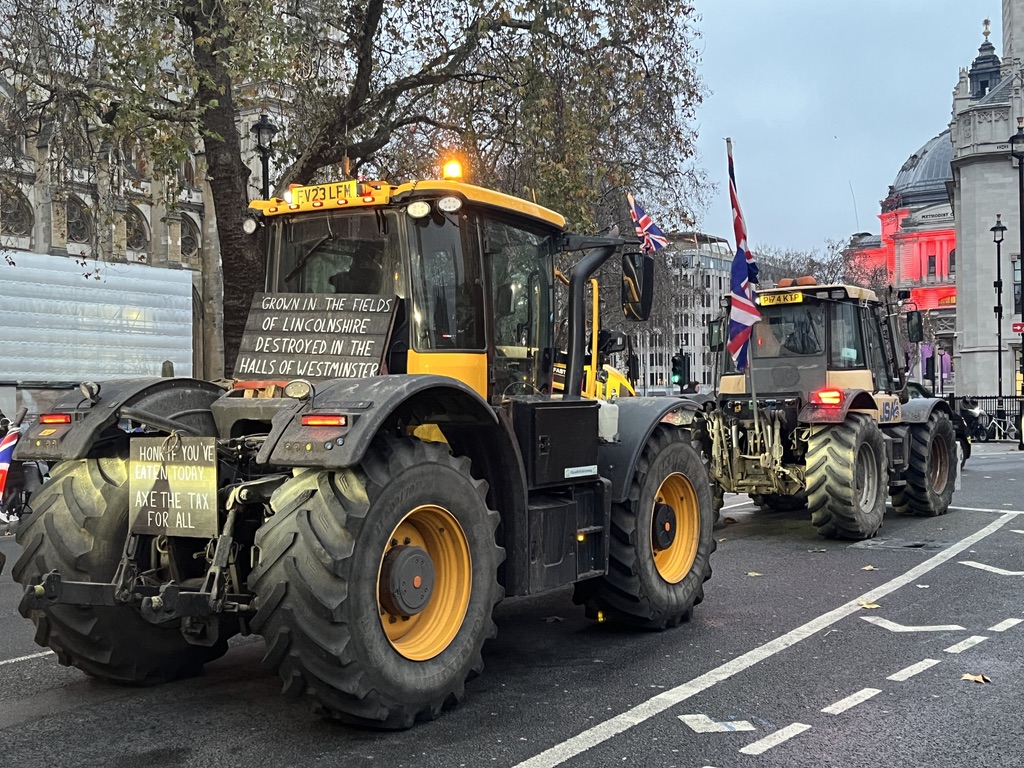
The tractors – decked out with anti-Labour slogans, Union Jacks and Christmas lights – circled the square and honked their horns as MPs voted to allow the bill to progress to the next stage.
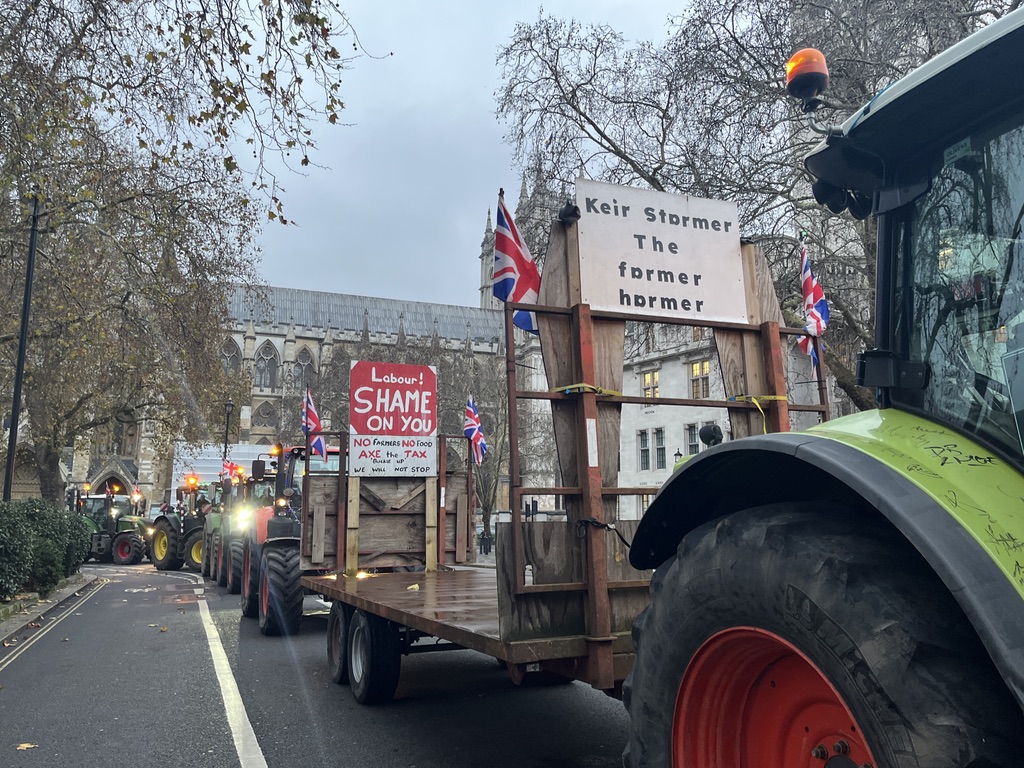
The forthcoming committee stage will allow amendments to the bill’s details and, crucially for farmers, potential changes to the 20% inheritance tax policy on assets over £1million.
Tom Evans, 35, a cattle farmer from Bledchington in Oxfordshire, said: “A lot of the farmers here today will lose either the whole family farm or an element of it.
“When you start selling off land to pay inheritance tax, how are you meant to actually farm? It doesn’t work. There’s no money left in the pot.
“We’ve done enough now, this is the sixth or seventh protest in London, the tax should be re-evaluated. We should be backing British farmers.”
Spring 2025 across England was the driest since 1893, according to the Environment Agency, and farmers have raised climate change as a significant issue.
The combination of the loss of EU farming subsidies over the next couple of years and the effects of severe drought and failed harvests has left many feeling that Labour is ‘kicking a man while he’s down’.
The beef farmer discussed selling off agricultural properties for housing as a way to diversify income stream, but noted that although it could be an emergency cash injection it was far from sustainable.
Evans further raised the issue of global food security and self-sufficiency – if there was ever a world war then we would need to produce essential food supplies at home.
Stephen Behr, 42, a farmer from Hertfordshire, said: “We can’t grow food for the nation if they make us sell part of our farms. If they make us do that, we can’t afford to survive.”
Behr voiced concerns that farmland would in future be used for solar farms rather than essential food production.
Inheritance Tax and historical context
The government estimates that 27%, or 500 UK farms, would be affected by the changes, where agricultural property relief from inheritance tax – passed in 1992 by John Major’s Conservative Cabinet – would no longer apply to assets over £1million.
With spousal allowances, the cap could amount to around £3million of tax-free inherited assets.
Private ownership of farmland increased massively after the First World War, when increased ‘Death Duties’ led aristocrats to sell previously tenanted farming estates, raising owner-occupation of cultivated land from 10.9% in 1914 to 36% in 1927, according to Simon Fairlie’s article in issue 35 of The Land, using data from the Agricultural History Review.
According to data from DEFRA, small farms (under 100 hectares) have approximately halved in the last 60 years.
As farms grow to exploit economies of scale, supermarket pricing squeezes their margins, forcing smaller or less profitable farms to sell up, while larger operations consolidate further — a cycle driven by unregulated market pressures.
The rise of mega-farms
The number of US-style ‘mega farms’ that intensively rear pigs and poultry has been rising in the UK, reaching 1,824 in 2024, a 20% increase since 2016.
The UK ranks second in Europe for its number of intensive poultry farms, with 1,553 compared to France’s 2342.
Environmental and policy concerns
Agricultural writers and small-scale farmers such as Colin Tudge and Chris Smaje advocate for small-scale farming for its biodiversity, resilience to climate change, and opportunities for skilled work.
In contrast, UK mega-farms have breached environmental regulations nearly 7000 times since 2015 (for pollution from slurry pits, air pollution and the over-stocking of animals), according to data released under freedom of information laws to Terry Jermy, the MP for South West Norfolk, and published in the Guardian.
While Labour’s inheritance tax changes intended to tax the wealthy who often buy up agricultural land for its tax loophole, for farmers it raises serious questions about UK agriculture’s future in an increasingly uncertain world.
DEFRA has been contacted for comment.
Feature image credit: Ivy Burnett

Join the discussion