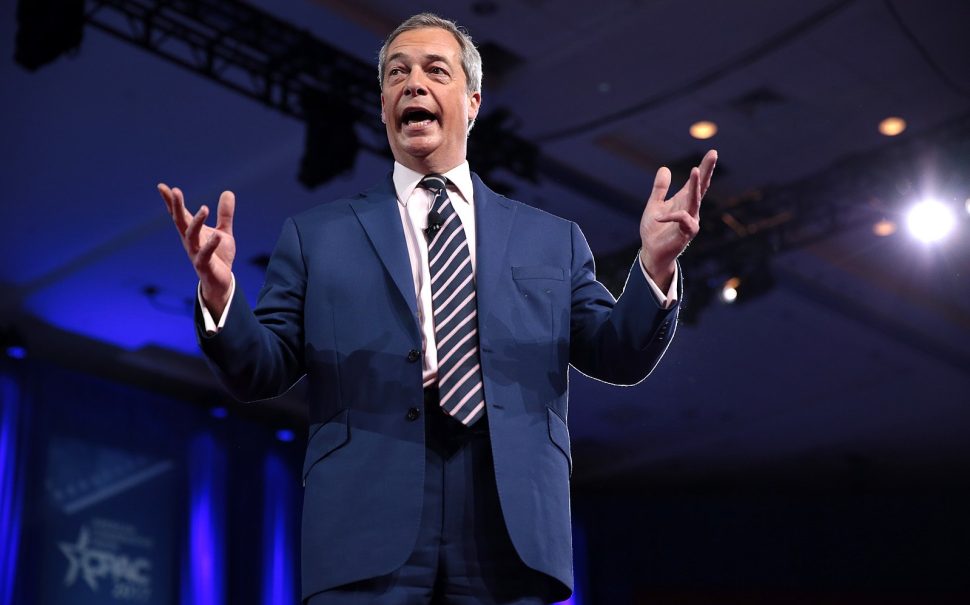
The Reform party gained more seats in London boroughs with a higher proportion of White British people, analysis shows.
Reform gained seats in 10 of the 32 London boroughs in the recent local elections, with almost 70% of seats won falling in areas with the top five largest White British demographics.
The three boroughs with the most White British residents all had major Reform gains, with Havering, the area with the joint-highest population moving to overall Reform control.
Dr Eoghan Kelly, Postdoctoral Researcher in British Politics at Queen Mary University of London, said: “I think the issue is less that Reform are doing well amongst white respondents and more that they’re doing poorly amongst minority groups.”
In the December poll he led, Reform were the largest party among white respondents but still, only 25% of White identifiers backed Reform.
Overall, Reform won 79 seats in London. Fifty-four of those seats were in the top five most White British areas.
Of the five London Boroughs that are the least White British, Redbridge, Tower Hamlets, Harrow, Brent and Newham, Reform only gained one seat in Redbridge.
Reform UK, formed in 2021 by Nigel Farage, has faced many accusations of stoking racial division, including from antiracism charities Stand Up To Racism and Hope Not Hate.
Farage strongly denied all claims of racism leading up to the elections, telling the BBC: “We have people from all different ethnicities, religions and backgrounds standing for us.”
But far from retreating from the subject, Farage has leant into the topic of race in modern Britain, claiming the British state now disadvantages white people with a ‘two-tier state’, in his first Substack essay.
Addressing concerns of racial division and increasing racism in Britain in a parliamentary response, Prime Minister Sir Keir Starmer recently said: “Racism and intolerance is permeating everywhere.
“We have to deal with it, because it’s tearing our societies apart.”
Yet, some experts warn against framing the political divide along identity and racial lines, finding other issues at play.
Grace Lordan, Professor and Founding Director of The Inclusion Initiative at the London School of Economics, said: “Culture and identity are part of the picture, but the evidence points to economics as the deeper driver.
“Growth in Britain has been concentrated in a small number of places and professions, and too many talented people have been left without a route to contribute to it or benefit from it.”
However, the electoral picture remains complex, with Reform failing to gain any seats in two of England’s most deprived Local Authority Districts: Hackney and Newham.
Of the five London Boroughs that are the least White British, Redbridge, Tower Hamlets, Harrow, Brent and Newham, Reform only gained one seat in Redbridge.
Reform UK were contacted for comment but did not respond.
Feature Image Credit: Gage Skidmore, licensed under CC BY-SA 3.0, via Wikimedia Commons


Join the discussion