Bandcamp, an American-owned online streaming platform, have announced their new policy restricting AI-generated music in line with their mission to uplift human creativity and support independent artists.
A statement released on January 13 warned music and audio that is generated wholly or in substantial part by AI is not permitted on Bandcamp and any use of AI tools to impersonate other artists or styles is strictly prohibited.
The company is committed to removing music suspected of being AI-generated and encourages users to report such content as well.
Bandcamp’s statement said: “With this policy, we’re putting human creativity first, and we will be sure to communicate any updates to the policy as the rapidly changing generative AI space develops.”
Bandcamp: ‘The anti-Spotify’
Labelled by the Los Angeles Times as the ‘anti-Spotify’ and by The Guardian as ‘the heroes of streaming’, Bandcamp is disrupting the music streaming scene as we know it.
But how does it work?
Unlike subscription-based streaming platforms, where payouts are typically distributed across a large pool of rights holders, Bandcamp claims that when fans buy anything via them, an average of 82% of the money goes to the artist or their label.
The remainder covers Bandcamp’s revenue share and payment processor fees.
The artists also get paid very quickly, typically within 24-48 hours.
The ethos is that they only make money when artists make a lot more money, highlighting the process as an ‘artist-forward’ approach.
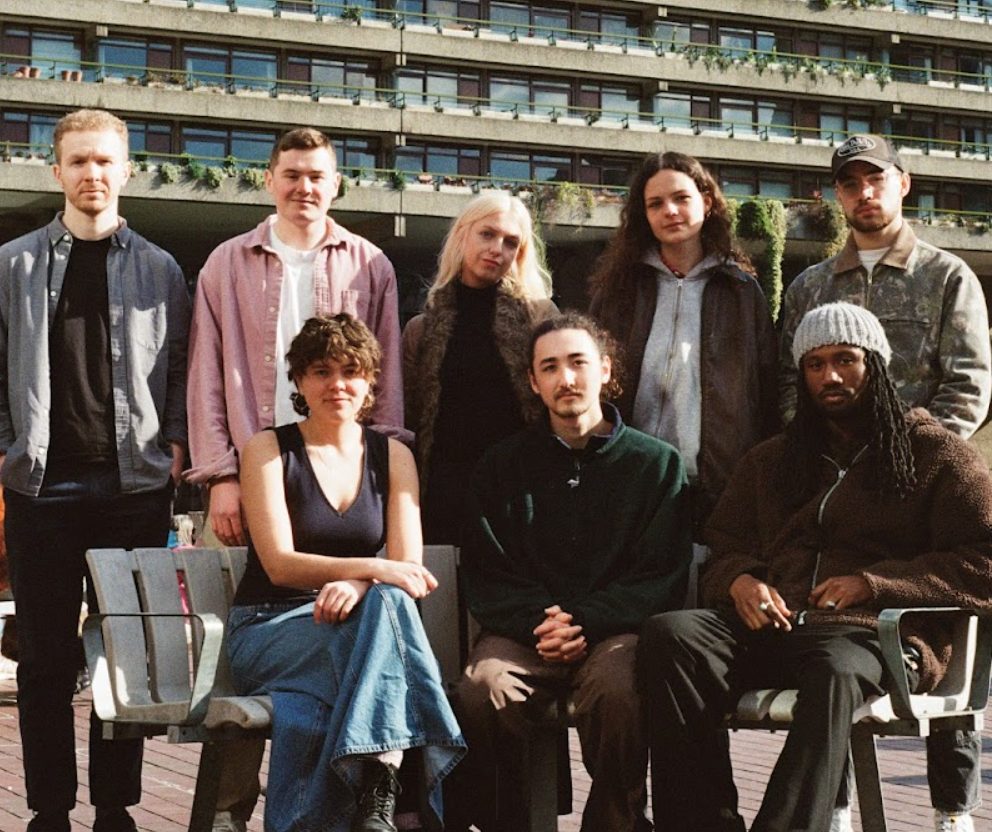
Emerging London jazz band Orchard can be found on Bandcamp.
Asked about Bandcamp’s decision to ban AI-generated audio and music, Orchard’s vocalist Evie Hill said: “This makes sense – this step aligns with Bandcamp’s ethos.
“They are already trying to provide a place for people to listen to music differently … how it used to be when people had to buy music and then listen to it.”
The controversy around AI in music
AI music and audio is no longer something from a dystopian novel. Instead, it is something which is being listened to every day.
Popular French streaming service Deezer revealed approximately 50,000 fully AI-generated tracks are uploaded daily to the platform, accounting for 34% of all daily uploads.
The platform also commissioned a first-of-its kind survey in November 2025, asking questions focused on perceptions and attitudes towards AI-generated music to 9,000 global respondents.
The survey revealed that when presented with AI-generated tracks, 97% of the respondents failed to recognise them.
Over half felt uncomfortable by not being able to tell the difference and an overwhelming majority felt that 100% AI-generated music should be clearly labelled, and they would like to know if a music streaming service is recommending such music.
Camden Roundhouse member and renowned music lover Cassandra Humble, 27, said: “I am disturbed by the influx of AI music into the industry and even more disturbed by the lack of regulation around it.
“I make an effort to support artists, but that is going to become harder and harder without true transparency.”
In the same survey, 52% of respondents felt 100% AI-generated songs should not be included alongside human-made songs in the main charts.

This comes as partly AI-generated folk-pop hit by Jacub was barred from Sweden’s official charts, after dominating the Swedish Spotify top rankings.
Jacub isn’t the first AI artist to make it this far.
The Velvet Sundown is described as: “A synthetic music project guided by human creative direction, and composed, voiced, and visualised with the support of artificial intelligence.
“Not quite human. Not quite machine. The Velvet Sundown lives somewhere in between.”
At time of reporting, they have 165,617 monthly listeners on Spotify.
Last year, The Velvet Sundown went viral, with CNBC reporting they made approximately $34,235 over a 30-day period.
In 2025, Xania Monet charted on Billboard, signed a $3 million deal, and boasts 200,000 Instagram followers and 1.2 million monthly Spotify listeners.
Xania Monet is an avatar accompanied by computer-generated human voice sounds, created by Telisha “Nikki” Jones.
While some argue that AI can offer increased creativity and efficiency in the industry, there has been significant criticism from artists who claim it blurs the line of copyright laws and leaves musicians open to exploitation – cloning unique voices and styles without permission.
Award-winning folk musician Emily Portman faced that situation last year when an AI album was released under her name and attempted to replicate her voice.
While it is not confirmed why this happened, it has been suggest whoever posted it wanted to use Portman’s fame to drive streams, whilst taking the royalties for themselves.
The Make It Fair Campaign was launched in early 2025 to raise awareness about the threat generative AI models posed to the British creative industries, highlighting the methods of scraping creative content from the internet without permission, acknowledgement, or payment.
Whilst Bandcamp’s statement is a move in the right direction, there is still far more regulation required to ensure musicians remain protected in the everchanging landscape.
UK Music policy and campaigns manager Dougie Brown said: “The proliferation of AI generated music is happening very quickly and there is no doubt that AI is having a massive impact on the sector.
“These are big issues that require big solutions.”
Feature image: Free to use from Unsplash/Pawel Czerwinski



Join the discussion