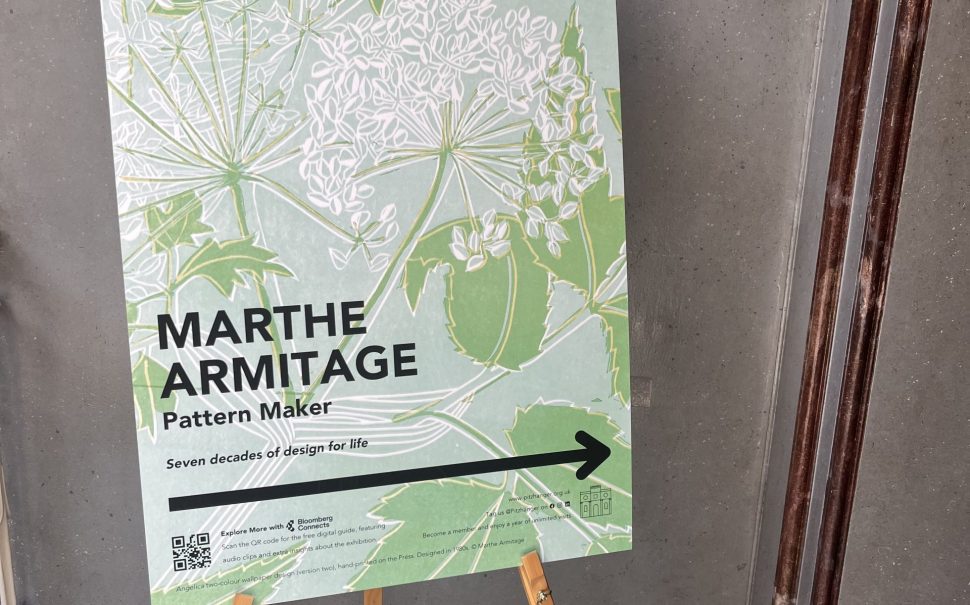
A flashback to the art’s and craft’s era of design – that is what Marthe Armitage’s work exudes upon first glance.
Her colour choices delicate and emotive, her motifs beautifully fluid yet clear. To see her wallpaper in person at Pitzhanger Manor and Gallery is to see a snippet into her creative mind.
The west London gallery displaying snippets of Armitage’s work both embodied her creative beauty, yet neglected to capture the viewer’s attention with quite the same efficacy.
My first impression of the exhibitions was unfortunately tainted by the slightly chaotic state of the Ealing house and gallery.
Upon walking in, I was not positive as to whether the exhibition was still open, despite what their website claimed.
They were switching the main exhibition space’s contents, in preparation for a new arrival – the result was piles of boxes out front, and confusing signage explaining the transfer.
Nothing to worry about, happily, as the welcoming attendant assured me all was well.
General admission was £12, though that is also changing soon, as from 29 July it will be raised to £14 – clearly, even galleries are feeling the economic squeeze.
This price feels worth the pleasure of witnessing the beautiful building, however.
Bought in 1800 by Sir John Soane, the estate was renovated to represent his unique architectural style of neoclassical trimmings and liberal uses of light and space.
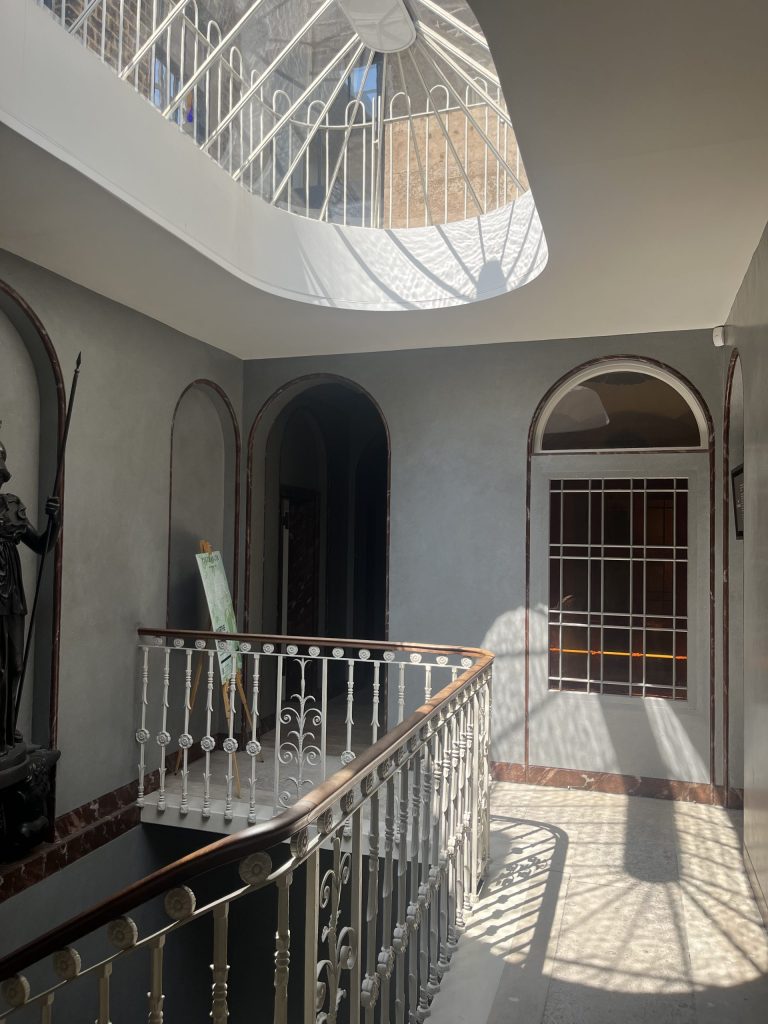
The ceiling light design feature welcomed we up to the top floor exhibition room. Upon entrance, I was posed with two options: left, towards a beautifully decorated bedroom, or right, towards two rooms resembling a rather bare studio.
The bedroom space displayed Armitage’s works in action, with the walls decorated with snippets of her wallpaper patterns, and the bed decked out with patterned sheets, duvet, and throw pillows.
One downside was the lack of proper lighting. While Soan might have been famous for his use of natural light, modern technology does provide that little bit of help which this room was lacking.
The beautifully displayed bed was slightly shadowed thanks to the time of day, and the rest of the room rather bare, and rather dark. A disappointment, considering the beauty it held.
The studio-esque rooms were delightfully bright, however. In it was displayed a wide array of sketches, final prints, and lithographs, all exhibiting Armitage’s artistic process.
With each piece displayed at eye level and without barriers, a deep long look at the details of her pieces was possible, and very worth it.
It also displayed a wonderfully large mural of her various sketches and prototypes, giving visitors a chance to dive into the mind of the artist.
The final room in this exhibition held a viewing of a film made of Armitage’s life and art process.
Visitors could watch the artist sketch anything from flowers to chess pieces, slice the pattern into a piece of lino, and finally transform into a versatile print.
To me, this film summarised the experience of this exhibition. It was designed to show their audience the creative process that lies behind Marthe Armitage’s work.
To manage this in a house designed for living, not displaying art, is impressive.
While some aspects were lacking, this top-floor exhibition truly feels like an escape into an artists world.
Featured Image Credit: Flora Sawyer




Join the discussion