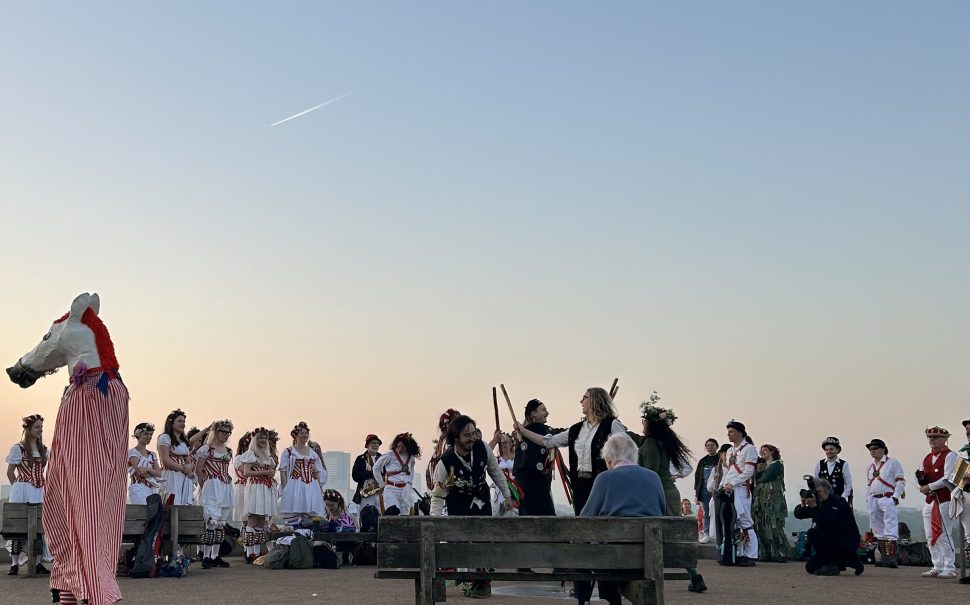
Morris dancing is a traditional folk dance dating back to around the 14th century, and has been a part of English life ever since.
So what’s the secret to its enduring success?
Although little is known about the dance’s exact origins, the name “Morris” is believed by historians and folklorists to have originated from the word Moorish, used to describe a popular type of dance in Spain and North Africa.
It is thought that the style of dance was brought back to England by returning Crusaders and then combined with pre-existing English folk music.
Since then, Morris dancing can be found across England, with different regions having developed their own distinctive styles.
These regional traditions were passed down by small yet committed groups of local enthusiasts, alongside the work of a nineteenth-century folk historian, Cecil Sharp.
Sharp was directly responsible for preserving regional examples of English Morris dancing, with their traditional musical accompaniments, resulting in five volumes of The Morris Book, published between 1907 and 1913.
Sharp’s establishment of the English Folk Dance Society in 1911 also helped to keep traditional dances alive throughout the country.
Since then, small groups of dancers have continued to keep the tradition alive, with each region clinging to its own Morris identity, even as people moved away from rural areas, and therefore away from rural culture .
Outside of London, groups such as Blackhorse and Standard dance Northwest Clog, which involves dancers moving through complex formations in wooden-soled clogs, while the Tower Ravens dance rapper, a fast-paced and athletic style involving flexible swords.
Morris dancing is also a traditional feature of May Day in Oxford, with two sides coordinating the dancing on May Morning, one from ‘town’ and one from ‘gown’.
The dancing traditionally begins at around 6am and continues for three hours at various locations across the city.
Poppy Webb, an Oxford resident, said: “Growing up, I would always cycle to school every May Day and going past the Morris dancers was an amazing thing to witness early in the morning.
“There was definitely something very unique and special about cycling through the Dreaming Spires, seeing traditions continue, I would almost be transported to another time while I was just on my way to school.”
Historically, Morris was a male-dominated tradition, however in recent years, the liberal folk movement has helped to diversify the culture.
Within London, there are now two long-established women’s troupes, New Esperance and Dacre Morris, who dance a Cotswold-style Morris.
One of the most well-known contemporary sides is the Belles of London City, an all-female troupe founded in 2009.
The founders and original dancers were taught by John Russell of The Beaux of London City, and when they founded the Belles, named the troupe in tribute to the long-running, and by then defunct, Beauxs.
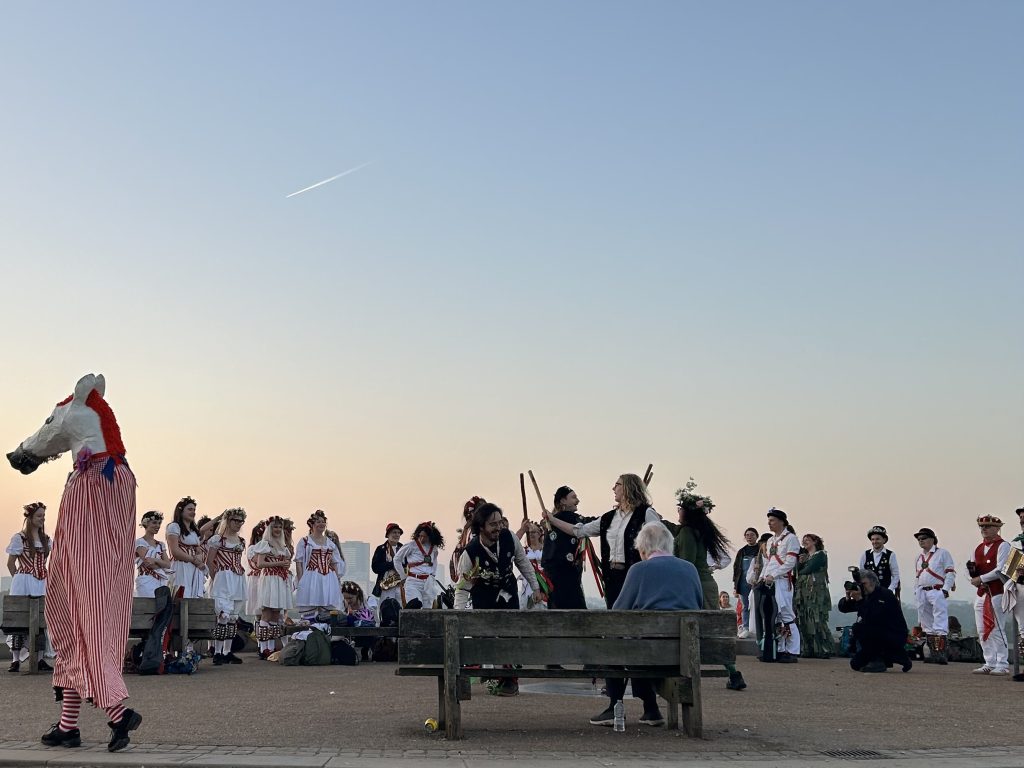
The Belles pride themselves on being an inclusive group and dance traditional Cotswold Morris, characterised by handkerchief and stick dances.
They perform across London and are recognisable by the bells on their legs and distinctive red and white outfits, which they make themselves.
Jo Breeze, secretary of The Belles of London City, said: “The Belles have been fortunate enough to have a significant intake of new members over the last couple of years, which means we have over twenty currently-active dancers.
“There are Belles aged from their 20s to their 70s, and like a lot of London sides, we’ve often had more younger members than perhaps the average for Morris.”
She added this is likely a reflection of London’s population, which tends to be younger.
The changing nature of Morris dancing can also be seen in the answers to the Morris Census, a questionnaire distributed every three years by Jack Worth, a dancer with Headington Quarry Morris Dancers.
The most recent data from the census in 2023, showed 12,600 members of Morris dance troupes in the UK, around 1,000 fewer than in 2020.
Most surprisingly the data showed for the first time there are now more female Morris dancers than male, with a substantial number of new recruits being women.
Instead, Worth points out, the challenge now facing Morris is the ageing population of dancers, there are more than twice as many dancers over 70 as under 30.
Despite this, Morris dancing appears to be having an unexpected moment in the limelight.
There is growing interest in folk traditions and seasonal celebrations, with folklore experiencing a resurgence and younger people showing fresh curiosity in authentic English folk culture.
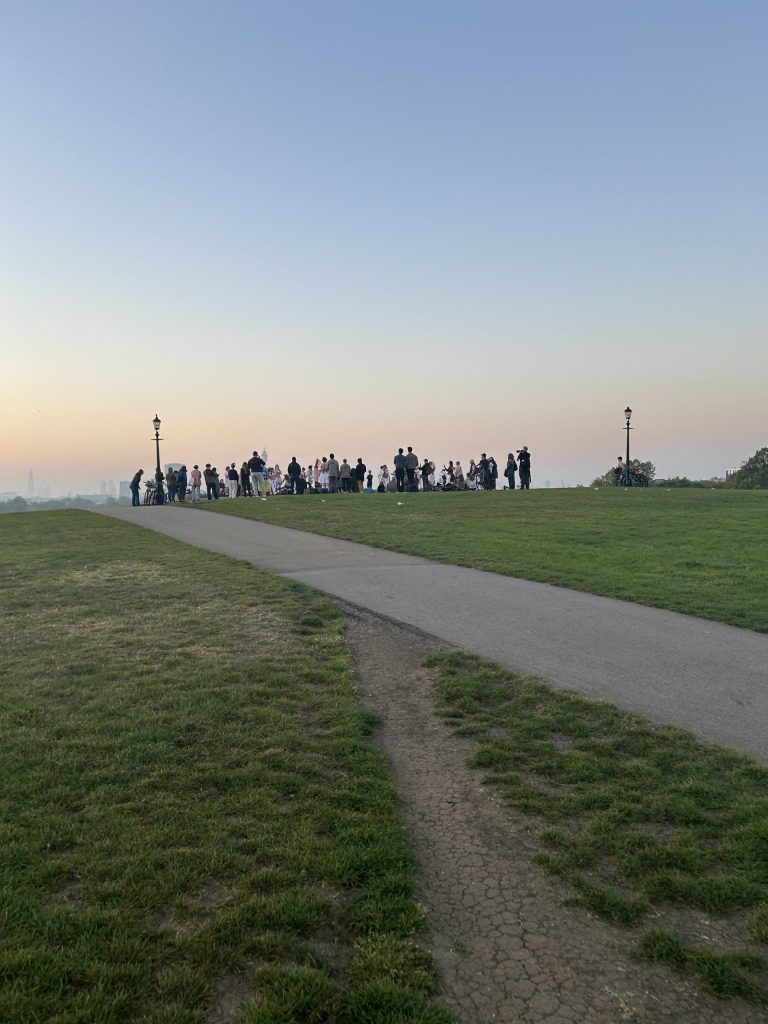
In London, London Pride Morris have been dancing at Primrose Hill on May Morning for over a decade, and invited the Belles to join them in 2014, an invitation they have accepted every May Day since.
Peter Kanssen, bagman of London Pride Morris, said: “London Pride Morris has over a dozen active members, with many dancing for over a decade.”
He added that the group narrowly missed out on being a founding member of the Morris Ring, the UK’s national association of Morris and Sword Dance clubs.
Both groups have seen an increase in the number of attendees on May Morning, despite the 5am start.
When asked about the revival, Jo Breeze said: “The wonderful thing about Morris dancing is it has carried on for centuries, in a variety of forms, and through that time it’s been celebrated, denigrated, welcomed, and banned.
“There have been regular Morris revivals, which have often shone a welcome light on the hard work of all the dancers and musicians who kept it going while out of the spotlight, if there’s another morris revival happening, then how wonderful to give that credit to all the sides who’ve been dancing for decades, and longer.”
She also highlighted the importance of community within the tradition, saying: “One of the things many Belles value incredibly highly about Morris is absolutely the community, not only the joy of building the strong friendships and connections we have within the side, but also our dear friends in other sides all over the country.
“The camaraderie between women’s Morris sides is something very special, the Morris community is thriving and has scope for so much diversity, and we find it to be incredibly interconnected and supportive.”
For those interested in getting involved, Jo recommends joining the Tuesday night Morris class at Cecil Sharp House in Camden.



Join the discussion