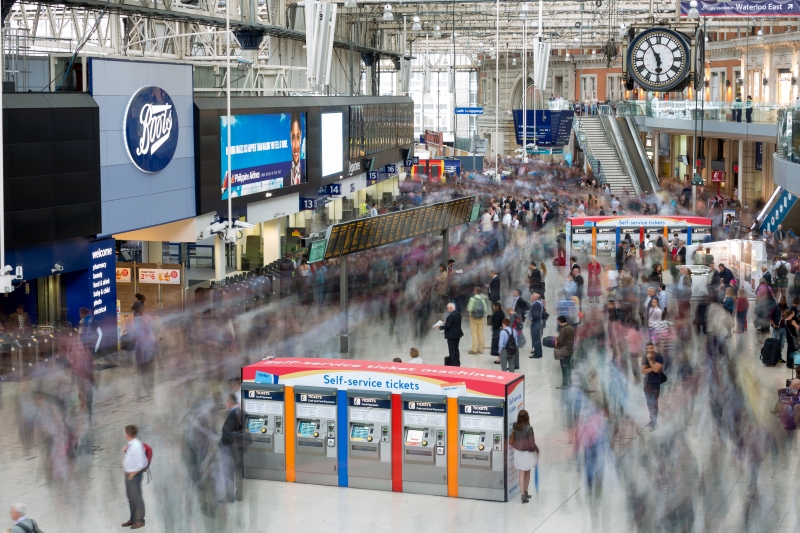
Recent TfL figures have highlighted a drop in demand for transport services, reflecting changing commuting habits “not yet fully understood” in their economic impact.
The latest TfL journeys by type of transport data, which breaks down service demand across the financial years 2011-24, shows plummeting bus and tube figures in the last five years.
Neither bus nor Tube figures are back above pre-pandemic levels, despite a significant recovery from the collapsing numbers during the pandemic.
Research body Centre for Cities (CfC) pointed out the economic impact of this gradual downturn in its Office Politics report from May 2023, saying that more than 70% of TfL’s revenue comes from its ticket sales.
The think tank, focused on the economies of the 63 largest cities and towns in the UK, has since built on its body of research to suggest that hybrid working has changed people’s commuting habits.
“While environmental sustainability is discussed in relation to city transport infrastructure, it’s clear user-friendliness and commuter experience are equally important factors,” researcher Oscar Selby explained.
“Hybrid working is seen as attractive by many due to its flexibility and lower transport costs, with many workers wanting to avoid lengthy and unpleasant commutes.
“In turn this can influence talent attraction and retention.
“There is an increase in cycling and use of shared bikes, like lime bikes, in London, not necessarily because they are cheaper than public transport but because they offer a more enjoyable commuting experience.
“I think we may reasonably say the shift towards cycling and away from traditional transport modes is partially driven by a desire to avoid crowded and uncomfortable commutes, which hybrid working has facilitated.”
Alison, 58, who commutes into London before the rush hour, emphasises the importance of a rail network that is familiar and “pretty reliable” to her.
She said: “I commute four days a week across London from 7am-3pm, and I’d find it really difficult to get to work without TfL services.
“Sometimes I travel from South East London and other times it’s North London. The trains are quieter during my early morning commute, until I reach the tube which gets a lot busier.”
However, a blog post by Selby from earlier this year notes that workers are generally spending more time out of the office than they were six years ago.
He pulls out two striking trends from the TfL tube data: Fridays and Mondays are showing the lowest turnout across the city, concentrated in the City of London financial district and Southbank cultural centre.
Alex, 24, a professional living and working in London, said: “I think the public transport is incredible but it could be better.
“It’s a bit expensive – I think this is because it’s not got much central funding.
“I do like to cycle in London as it has a pretty good cycle network. It’s great the network exists at all and cycle routes are all over the city.
“I work remote and don’t commute regularly, but I use the cycle routes in rush hour when I travel to my girlfriend’s place.
“You do have to pay attention but, with the exception of people treating their commute like a race and the odd rogue car, it feels pretty safe.”
According to the Lime Times blog, more than four million Londoners have chosen Lime since its launch in 2018 – with 16 million journeys taken during commuting hours in 2024 alone.
And the London Cycling Campaign (LCC), which similarly underscores 2019 as a turning point for city travel, indicates the uptake in cycling has been mostly centralised in inner London.
This is thought to be a result of better supporting infrastructure, such as the East-West Cycle Superhighway approved in 2016.
An LCC report from 2020, titled ‘Cycling to avoid Coronavirus?’, highlighted a direct correlation between urban commuting and public health, issuing guidance to new cyclists wanting to “dodge packed tubes and buses” in favour of individual travel in the open air.
Interestingly, one of the key economies bound up with hybrid working and changing travel, according to CfC, is a geographical one relating to proximity.
Agglomeration is a theory that shows cities derive high economic performance and knowledge production from workers being close to one another.
In its Office Politics report, the CfC emphasises that the instantly recognisable benefits of home working to the individual worker are outweighing the “longer term and less visible” of collective office working, determining both policy and productivity.
“Hybrid working might enable greater personalisation of work routines, especially prized by the high-value commuters we see in cities like London,” Selby added.
“But the broader implications for city economies are not yet fully understood and could be here to stay.”
Featured image credit: Photo by David Iliff via Wikimedia Commons under CC BY-SA 3.0 licence




Join the discussion