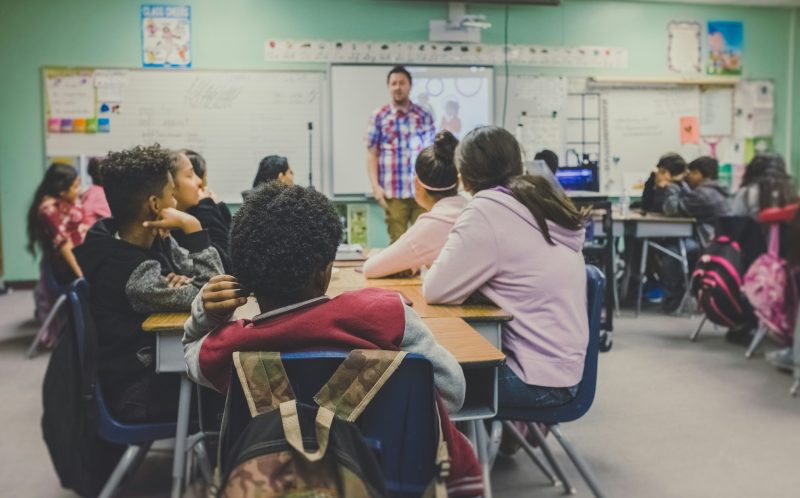
Islington schools have the highest suspension rate in London, new data released by the Department for Education has revealed.
The research – which was collected from the 2024/25 autumn term – shows that 932 pupils were suspended in Islington, which is equivalent to a rate of four suspensions per 100 pupils.
Persistent disruptive behaviour, physical abuse towards other pupils, and verbal abuse towards staff were the top three reasons given for the suspensions in Islington.
Islington Councillor and Executive Member for Children, Young People and Families, Michelline Safi-Ngongo, stressed the importance of contextualising the latest figures.
She said: “While Islington’s overall suspension rate appears high, this figure masks significant variation between schools.
“Almost three quarters of secondary suspensions come from a handful of schools, while others are consistently among the lowest in London.”
However, the Labour Councillor also underlined their commitment to improving the situation across the borough.
“For schools where suspensions are highest, we give extra support,” she added.
“This includes help from specialist teams, training for staff on positive ways to manage behaviour, and extra funding from the Mayor of London’s Violence Reduction Unit (VRU) to put in place approaches that keep pupils in school rather than relying on punishment.”
The VRU argues that removing young people from school increases their likelihood of becoming involved in crime.
To address this issue, London Mayor Sadiq Khan launched the Inclusion Charter – which Islington has pledged to – in February last year.
The Charter – which the Mayor hopes will reduce violence among young people – encourages schools to reduce the number of pupils they are excluding or suspending.
However, in the autumn 2024 term, figures remained high across the capital, with schools in Bexley, Croydon, Barnet, Enfield and Hackney all handing out more than 1000 suspensions.
The directive from the Mayor comes amidst increased scrutiny on the impact of lockdowns on schools and young people.
The Department for Education statistics also confirmed that – despite a slight reduction from last year – the total number of suspensions across London is still much higher than pre-Covid-19 levels.
There were 22,953 suspensions in autumn 2024, which is a 16% increase from the 19,808 suspensions in the 2019 autumn term – the last full term before the first UK-wide lockdown in March 2020.
Schools were closed as part of the government’s pandemic measures, with children and staff ordered to stay at home for several months.
Zenna Hopson, CEO of exclusion charity Dallaglio RugbyWorks, was scathing about a lack of preparedness around school closures, which she says has had an impact on children’s ability to self-regulate.
She said: “The way in which young people were treated during the pandemic was tantamount to a crime.
“Children need to be in a group environment in order to learn societal behaviours that are acceptable and those that are not, and we’ve deprived them of that opportunity.
“We’ve seen a catastrophic effect from the isolation and lack of planning – and that’s a systemic government failure.
“There was no overarching strategy, which left young people isolated, confused, unable to interact and unable to develop in normal social ways.”
Hopson – who was chairman of Ofsted between 2006 and 2010 – also suggested that increased screen-time among children has affected their behaviour in the classroom.
“Social media has eroded children’s basic manners and skewed their expectations,” she said.
“Algortithms take children down tunnels – if you show some interest in violence, you will then be shown an incredible amount of violent content.
“After continued exposure, children desensitised to violence, anger and aggression.
“We wouldn’t have done this in any other sphere – we’ve let young people loose on the internet and social media without training them for it.”
When comparing the autumn 2019 term to the autumn 2024 term, the data also reveals how some London boroughs have seen a substantial percentage increase in the amount of suspensions.
Barnet and Brent saw the largest increase, with 70% more suspensions being given out in their schools compared to five years ago.
Hopson – whose charity uses rugby as a means to develop trusted adult relationships for excluded children – suggested that a rethink of the curriculum is necessary to get children reengaged with school.
“Young people are feeling continually disenchanted with being forced to learn stuff the know is irrelevant,” she said.
“There’s a real lack of alignment, and therefore a lack of trust between what they’re being taught and their lived experience.
“The curriculum is no longer fit for purpose, and pupils now know that they are being sold a lie – will five GCSEs with English and maths get you a better job? No, it won’t.
“What will get you a better job is having the skills that are needed in the workplace in the 21st century, including teamwork, collaboration, critical thinking and leadership.
“We need more resources in schools, we do not have enough enrichment and sport, and there needs to be more SEND (special education needs and disabilities) coordinators and practitioners.”
A Department for Education spokesperson said: “This government is taking the action needed to get our kids back in school, so that every child can achieve and thrive.
“Recent figures show the biggest year-on-year decreases in autumn suspension and permanent exclusion rates since the pandemic. Once in the classroom, we know that too much time is lost on poor behaviour and so it’s encouraging that teachers are reporting significant improvements – proof that the collective effort by schools, parents and government is working.
“We won’t stop there and through our Plan for Change, we are rolling out free breakfast clubs in every primary school, new behaviour attendance hubs and unprecedented mental health support which will transform school for hundreds of thousands of pupils up and down the country.”
Featured image credit: Kenny Eliason on Unsplash


Join the discussion