A north London school sailing programme that has helped more than 1,000 students get on the water is highlighting how access to the sport is beginning to widen.
The Scaramouche Sailing Trust, which supports the Greig City Academy sailing programme, aims to “change lives through sailing”, helping young people develop skills, confidence and opportunities they might not otherwise access.
The programme has shown that sailing, traditionally associated with private schools and coastal communities, can be accessible to inner-city students.
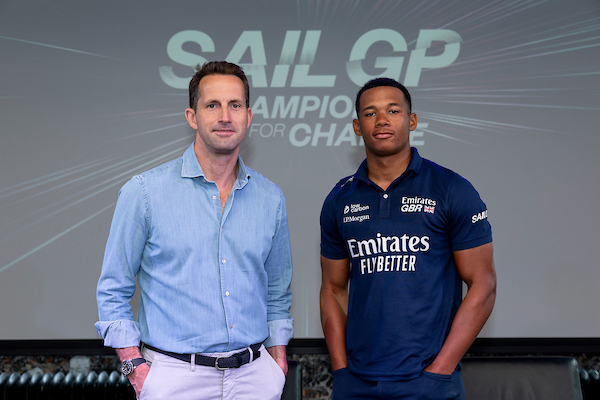
One of its most prominent success stories is Kai Hockley, from Haringey, who was introduced to sailing through the Greig City Academy programme. What began as a school initiative quickly developed into a pathway into professional sailing.
Hockley said: “I joined a school project when I was in year seven. The school’s Head of Sixth Form, John Holt raised money, bought a boat and started fixing it up, and that’s where I first started sailing. I joined when it was just getting established, so I kind of grew with it.”
Within two years, Hockley became the youngest ever competitor in the Fastnet Race.
The Rolex Fastnet Race is a prestigious offshore yacht race, covering around 695 nautical miles from Cowes to Cherbourg via the Fastnet Rock off Ireland, and is widely regarded as one of sailing’s toughest endurance challenges.
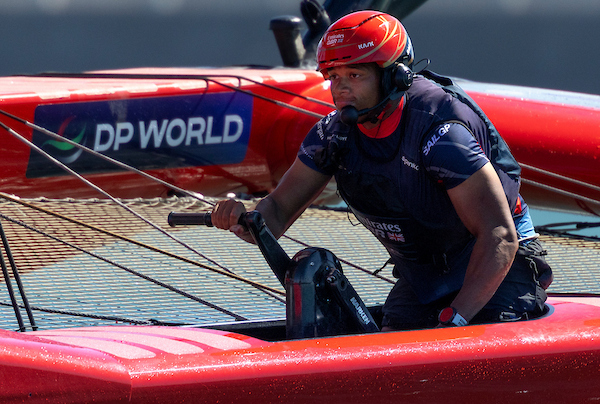
After completing an internship in 2023 with Emirates GBR’s F50 Shore Team, he became part of the Emirates GBR SailGP team, working towards a professional racing role.
Hockley was given the opportunity from Sir Ben Ainslie to join the Athena Sports Group as a development sailor and work with Emirates GBR in the America’s Cup and Sail GP.
“The biggest change has been the fitness,” he said. “These guys are serious athletes — it’s not what people expect from sailing. Before, I was sailing as much as I could on weekends, but now it’s that alongside gym work and a much deeper technical understanding of the boats.
“Being part of the team has really helped my development both on and off the water, You learn how the boat works, how the foils work, and you’re constantly learning from the other athletes.”
Hockley’s development reflects wider efforts within the sport to create more accessible pathways. Emirates GBR has been recognised for its youth development programme, delivering more than 350 hours of on-water training and investing in initiatives aimed at increasing participation.
He added: “Everyone wants sailing to grow, but that means mass participation. People from all backgrounds need the opportunity to get involved.”
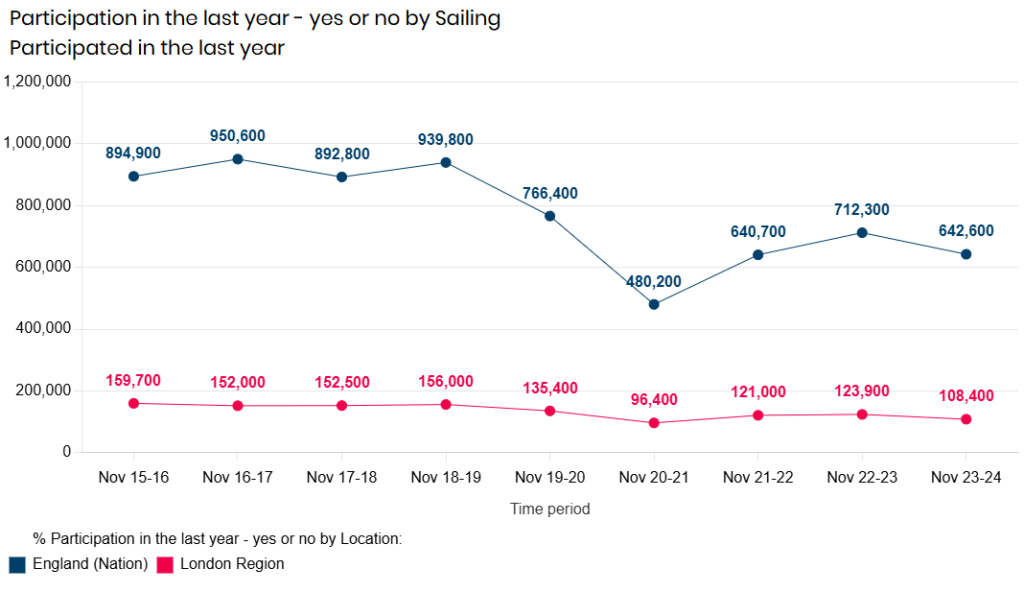
However, participation data suggests progress remains uneven. Across England, around 950,600 people took part in sailing and boating in 2016–17.
This fell sharply to 480,200 during the COVID-19 pandemic, before recovering to 642,600 in 2023–24. In London, participation has risen to just over 108,000 people in recent years.
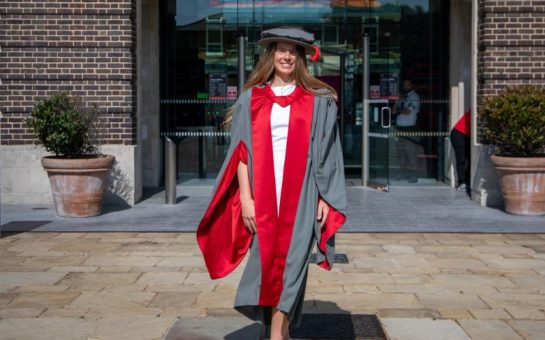
At club level, there are signs of change. Ruaraidh Plummer, CEO and founder of the London School of Sailing, said grassroots access in the capital is improving, but barriers remain.
Plummer said: “When I started, there wasn’t much on offer in London, so I wanted to create something that made sailing more accessible at a grassroots level.
“Since then, interest has really taken off. We’re seeing a much younger group getting involved and more people trying the sport for the first time.
“London is a unique place to sail, especially on the Thames, but access can still be limited and there are barriers, particularly around diversity.
“That said, there are good entry points, and dinghy sailing is one of the best ways to get into the sport because you learn quickly and build confidence early.”
While participation is recovering and new pathways are emerging, those involved in the sport say improving access at a local level will be key to its long-term future.
Source: L.GOLDMAN/INEOS BRITANNIA


Join the discussion