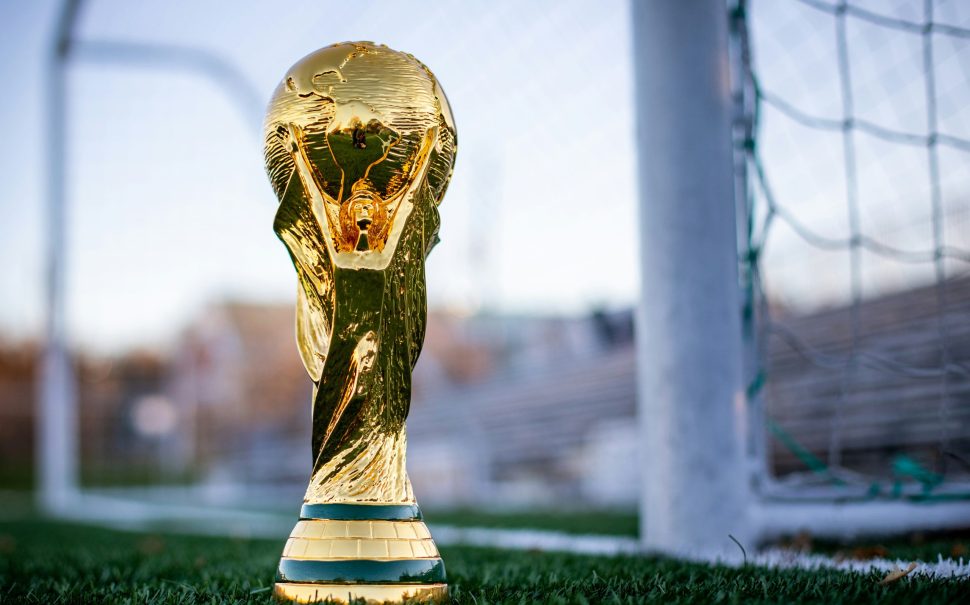
Every four years, the world’s best footballing nations converge on a single tournament and the debate about what it means to win it reignites.
With World Cup odds reflecting the depth and quality of the 2026 field, the question of whether lifting the trophy is genuinely harder than winning a continental championship is worth examining properly.
The answer is more nuanced than it might first appear.
The case for the World Cup being harder
The most obvious argument is the breadth of opposition.
At a European Championship, a team faces opponents drawn exclusively from UEFA’s member nations, the most competitive confederation in the world but still a geographically and culturally contained group.
At the World Cup, a European side might face South American technical quality, African physicality and pace, and Asian tactical discipline across the same knockout run.
The variety of styles, systems, and individual qualities is simply greater, and preparing for that variety is a challenge no continental tournament replicates.
The expanded 2026 format, with 48 nations competing across potentially seven matches for the winning team, adds a further physical dimension.
Managing squad depth, injury risks, and momentum across a longer campaign in summer heat across multiple time zones is a test that the European Championship’s 24-team format and Copa America’s 16-team structure do not impose to the same degree.
There is also the statistical reality. Brazil, the most successful nation in World Cup history, have lifted the trophy five times in 22 editions.
Argentina and Germany have won it three times each. The difficulty of sustaining the level required across a month-long campaign against the world’s best is reflected in how rarely even the greatest nations repeat the achievement.
The European Championship
The Euros is the most competitive continental tournament in world football, and a strong argument can be made that winning it is harder than winning a World Cup from a purely quality-of-opposition standpoint.
UEFA contains every major footballing nation in Europe, and the group stage alone in recent editions has produced matches of World Cup final quality.
Spain’s dominance across 2008, 2010, and 2012, winning the Euros, World Cup, and Euros in succession, is the clearest evidence that the two competitions reward similar qualities.
Winning both in that sequence required sustained excellence against the best players and the best tactical minds in the sport across multiple campaigns. Few nations have come close to replicating it.
Copa America
The Copa America is the oldest continental tournament in the world, dating back to 1916, and its field of ten South American nations produces a competition of extraordinary intensity despite its relatively small size.
Brazil and Argentina have dominated the World Cup between them, but both have experienced Copa America droughts that underline how difficult the continental title is to claim even for the sport’s superpowers.
Argentina waited 28 years between Copa America titles before winning in 2021, then retained it in 2024. For context, they also won the 2022 World Cup in that period.
Messi himself described winning the Copa America in 2021 as the most important title of his career at that point, before the World Cup triumph the following year provided the ultimate answer.
The Copa America’s physical and tactical demands, played largely in South American conditions against opponents who know each other intimately, create a different but equally valid examination.
AFCON
The Africa Cup of Nations is the most frequently held of the three continental competitions, staged every two years until 2013 and now every four years in odd-numbered years.
For African nations, it represents the pinnacle of continental achievement, and the competition’s history reflects a depth of quality that is often underestimated outside the continent.
Morocco’s recent World Cup semi-final run reflects an African game that is closing the gap on the traditional superpowers.
Winning AFCON requires navigating a field of nations whose domestic league structures and player pools vary enormously, demanding a different kind of squad management and tactical flexibility.
For those comparing betting offers across the major international tournaments, AFCON’s markets reflect a competition where upsets are frequent and favourites fall regularly.
The World Cup is harder to win in terms of breadth of opposition, length of campaign, and global stakes.
But the European Championship is arguably harder in terms of the pure quality of opposition faced across every match.
The Copa America and AFCON each present unique and demanding challenges that their respective continents recognise as the true measure of a nation’s football.
What separates the World Cup is not necessarily the difficulty of winning it, but what winning it means.
It is the only competition that measures a nation against the entire world, and that is a distinction that no continental trophy, however hard-earned, can replicate.
Feature image: Free to use from Unsplash




Join the discussion