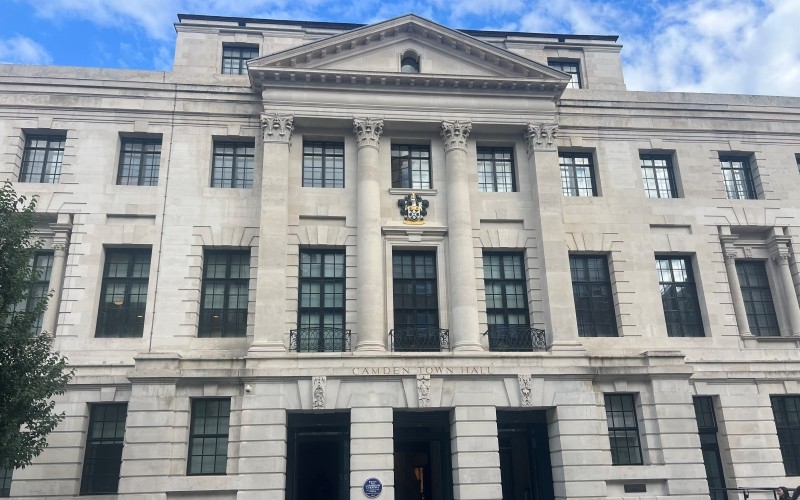
Camden has recorded a 23% increase in rough sleepers in the last year, the biggest proportional rise of any London borough, after the council has spent more than £78million on homelessness and rough sleeping services since May 2024.
The latest figures from the Combined Homelessness and Information Network (CHAIN) show that, despite the overall London rough sleeping population falling by 10%, Camden reported an increase from 311 to 382 rough sleepers since April 2025.
In its Homelessness and Rough Sleeping Strategy 2025–2030, the council described the current level of expenditure on temporary accommodation as ‘unsustainable in the medium to long term’.
“Temporary accommodation is a London-wide financial pressure which has reached crisis proportions and is a direct consequence of the wider housing crisis in the capital,” the council said.
Camden has a history of high rough sleeper numbers, consistently ranking second among London boroughs, behind only Westminster.
CHAIN records data on people seen by outreach workers but cannot record ‘hidden homeless’ groups such as those who are squatting, sofa-surfing or staying in places inaccessible to social workers.
In April, London homelessness charity Single Homeless Project was awarded a £10million contract to lead Camden Council’s rough sleeping outreach service.
The six-year partnership builds on the council’s previous work to end street homelessness, centred on the Camden Rough Sleeping Hub.
The Hub, described as a ‘one-stop shop’ for those seeking to ‘rebuild their lives away from the street’, will come into use from 1 April 2027.
In contrast, neighbouring borough Islington has recorded an 18% decrease in rough sleeping numbers.
Jason Jackson, Islington’s councillor for homes and neighbourhoods, said a ‘preventative approach’ is crucial to ensuring rough sleepers do not fall back into the same trap.
Jackson said: “Just providing a bed is not enough; we need all boroughs to step up and rise to the challenge, to create a level playing field.
“Rough sleeping cannot be something about political positioning, and central government and the Greater London Authority need to think about what this support looks like long-term.”
This follows the Mayor of London and Greater London Authority’s ‘Rough Sleeping Plan of Action’, launched in May last year, which aims to end rough sleeping in London by 2030.
Writing on the GLA’s website, London Mayor Sadiq Khan said the city wants to ‘end this vicious cycle’, with prevention efforts crucial to ‘stop the rising tide’ of street homelessness.
Khan also called on the government to help by increasing the national stock of social and affordable housing.
A spokesperson for St Mungo’s, a UK rough sleeping charity, said Camden had seen a 14% rise from the previous quarter in people who are new to rough sleeping.
The spokesperson said: “Alongside partners, St Mungo’s will play a key role in Andy Burnham’s drive to provide a route off the streets to everyone before Christmas.
“With the right sustained support, matched with the funding, no one should fall through the cracks and become another worrying statistic in the homelessness emergency.”
Featured image credit: Duncan Paterson
Join the discussion