While diamonds might be considered ‘a girl’s best friend’, for Marie Antoinette in 18th century France, they were her death sentence. A necklace containing 647 diamonds and weighing 2,800 carats contributed to a swift end for the final French Queen.
In 1793, a tangled scandal involving an unpaid jeweller, the Queen’s forged signature, and an angry mob of hungry revolutionists, culminated in the false belief that she had scandalously thrown nearly two million francs at the lavish piece, while the French public were left scavenging for bread.
Despite having already rejected the jewels, all it took was the French people to believe she had splashed out on the set, to seal her fate. From a scandalous necklace to headless, Marie Antoinette died with one quick release of the guillotine.
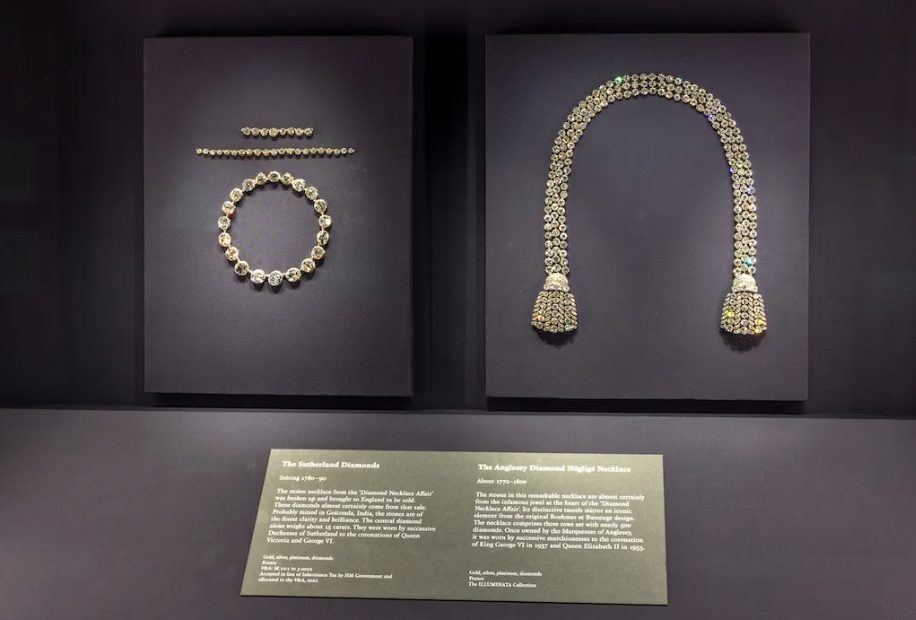
Now, over 230 years later, a reproduction of the now lost necklace sits in the exhibition among her other tainted possessions. However, as Sarah Grant, Senior Curator at the V&A housing the Marie Antoinette exhibition explains, it is her final note that is the most shocking part of the exhibition.
The note reads: “My eyes have no more tears to cry for you, my poor children. My God, how painful it is for me to leave them forever!”
Speaking of the note, Grant said: “Nothing can prepare you for seeing and handling her final note, which she wrote at dawn the morning of her execution – every stroke of the pen conveys her anguish.”
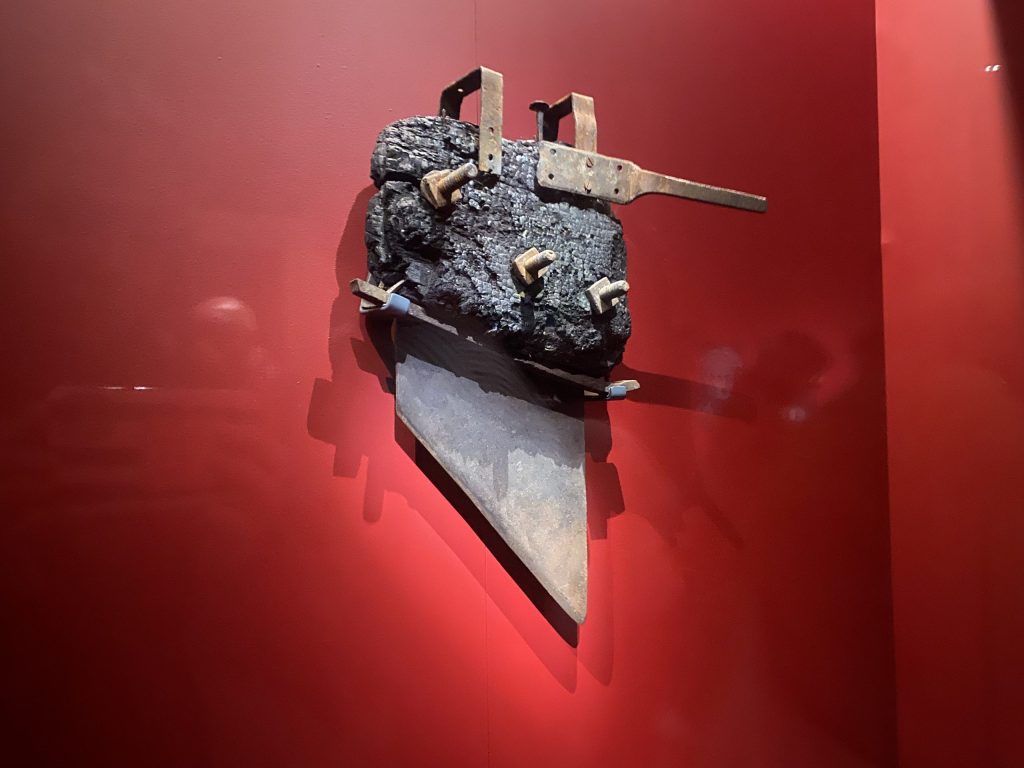
Alongside this, the guillotine used to end her life is lit up in a display; a sombre reminder of the young Queen’s fate.
Grant also remarks that Marie Antoinette is more familiar to a modern audience, than one would think.
Reflecting on the investigation of the French Queen’s bourdoir, Grant said: “The research I did into her toiletries showed she had all the same products commonly in use today – almond exfoliating pastes and tooth whitening products.”
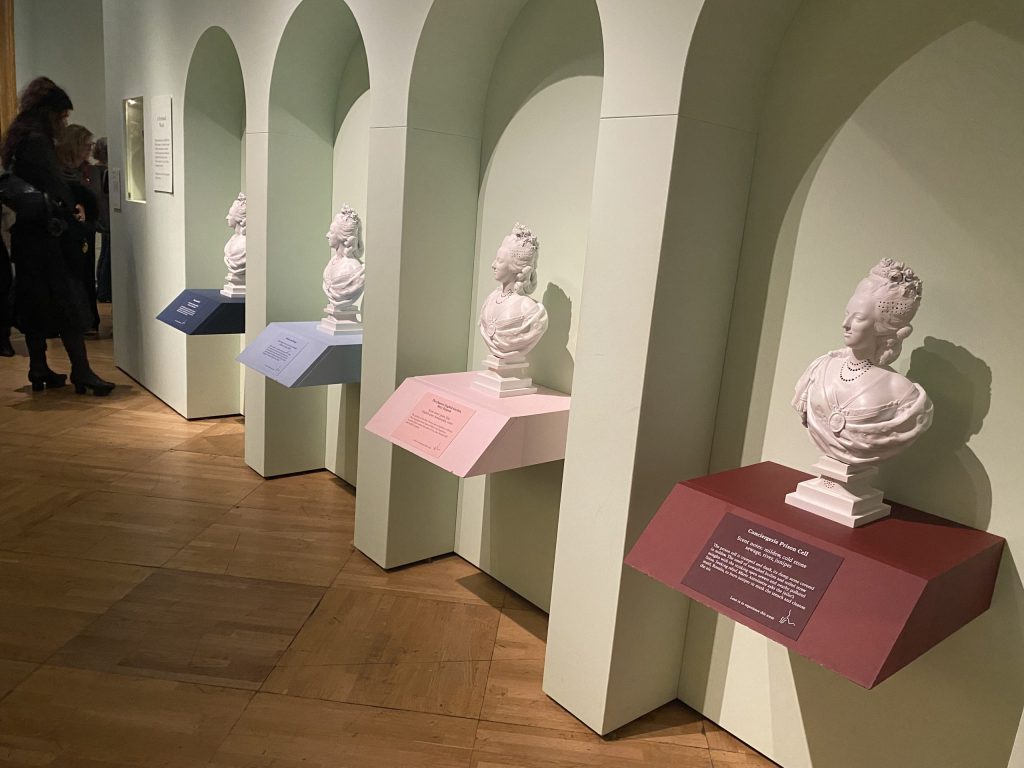
Antoinette’s perfume is on display in an interactive feature where scents from her life have been recreated. Tash Marks, the exhibition’s perfume designer, said: “From her receipts and her writings, we knew her scents to be heavy on orris root and rose, with touches of bergamot and musk.”
The exhibited scents ranged from the Queen’s toilette, with soft floral notes, mimicking her beauty routine, her garden, with fresh honeysuckle, the masquerade ball, evoking hints of wax, smoke and wood and finally the prison cell, a confronting raw sewage and mildew smell, with a hint of juniper – an attempt to mask the stench.
Reflecting on the exhibit, Grant said: “I hope she would find the olfactory installation entertaining.”
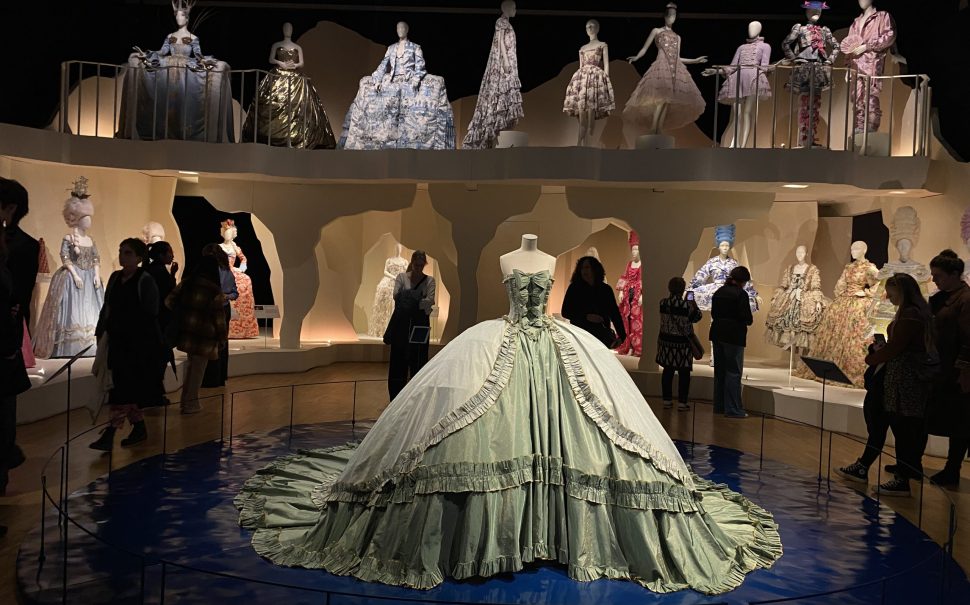
The V&A’s exhibition on Marie Antoinette showcases her life and influence on modern day culture through the her garments, such as her wedding dress and deinty shoes, as well as contemporaneous objects and explicit drawings, published by her adversaries, depicting her relationship with the king.
Her impact on the modern day fashion scene is indisputable. She has been solidified as a historical figure who is continually referenced by designers and fashion houses, as Grant explained, ‘her style represents the absolute pinnacle in terms of quality, design and luxury craftsmanship.’
Grant said: “She was also a young and charismatic queen who loved fashion and art, and together with the sensational events of her life and times, this is a very potent mix.”
The possessions on show were chosen with care, as they create an intimate picture of the famous French Queen, portraying her life beyond luxuries, and making her appear more human.
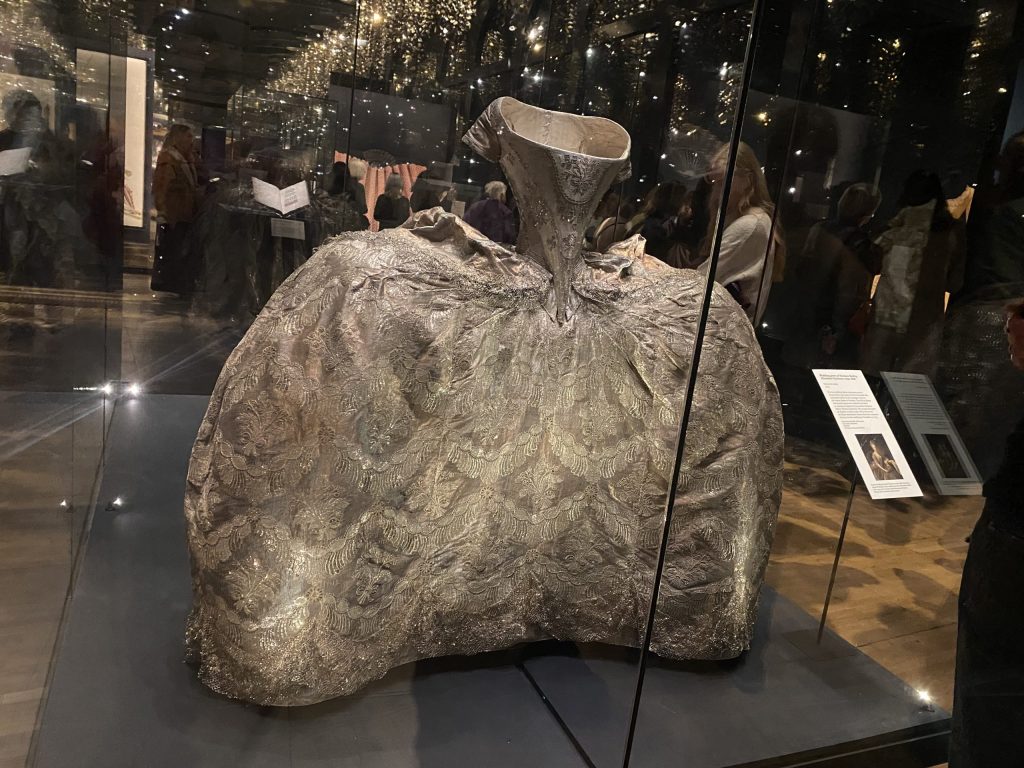
Perceptions of the Queen have shifted since Sofia Coppola’s magnetic 2006 film, Marie Antoinette, that reimagined the Queen’s life. In recent years, there has also been a new wave of research around her life and reign.
Grant said this prompted the exhibition, as ‘the time felt right to explore Marie Antoinette’s story in a fresh way, using an entirely new approach to that of previous more traditional exhibitions.’
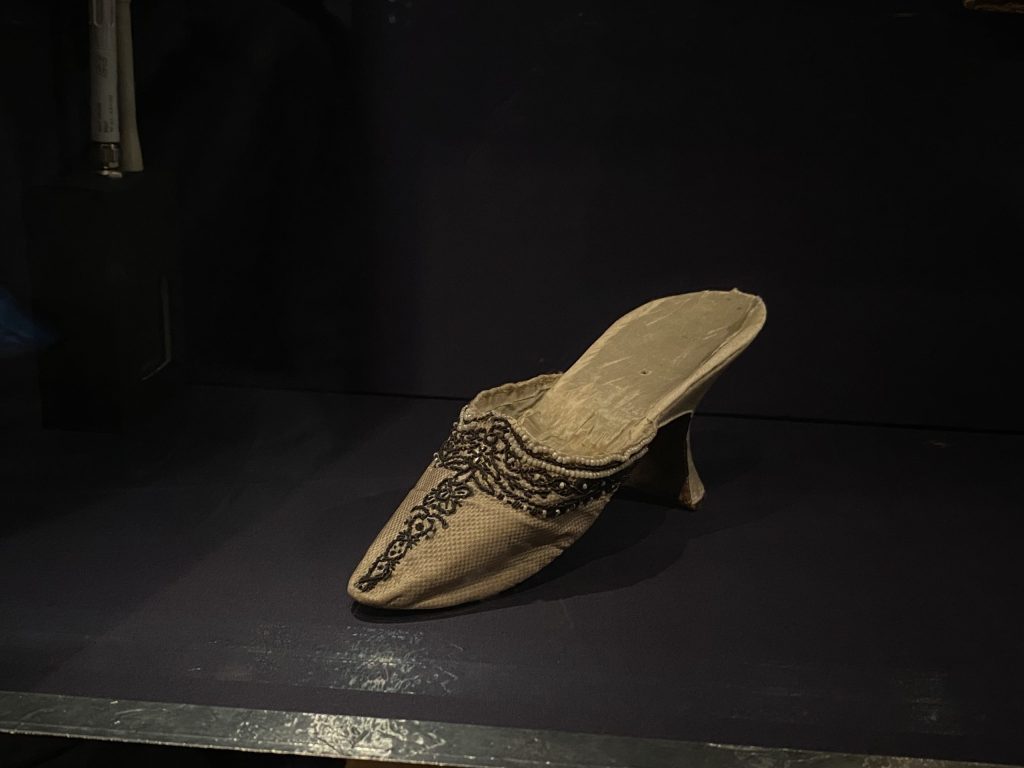
Although the exhibition lays out her most lavish and intricate dresses and jewels, it is the personal artefacts that bring nuance and intimacy to the space. Lockets, letters and prayer books all accumulate to paint a tangible picture of the Queen’s life.
Grant said: “She would be very emotional, I think, to see the satirical and sexually graphic pamphlets levelled against her, and the locket combining her hair with that of her son, who died in prison aged 10, from abuse and neglect.” The portrait of her and her two children encourages sympathy for a mother whose life was cut short, leaving her young children behind.
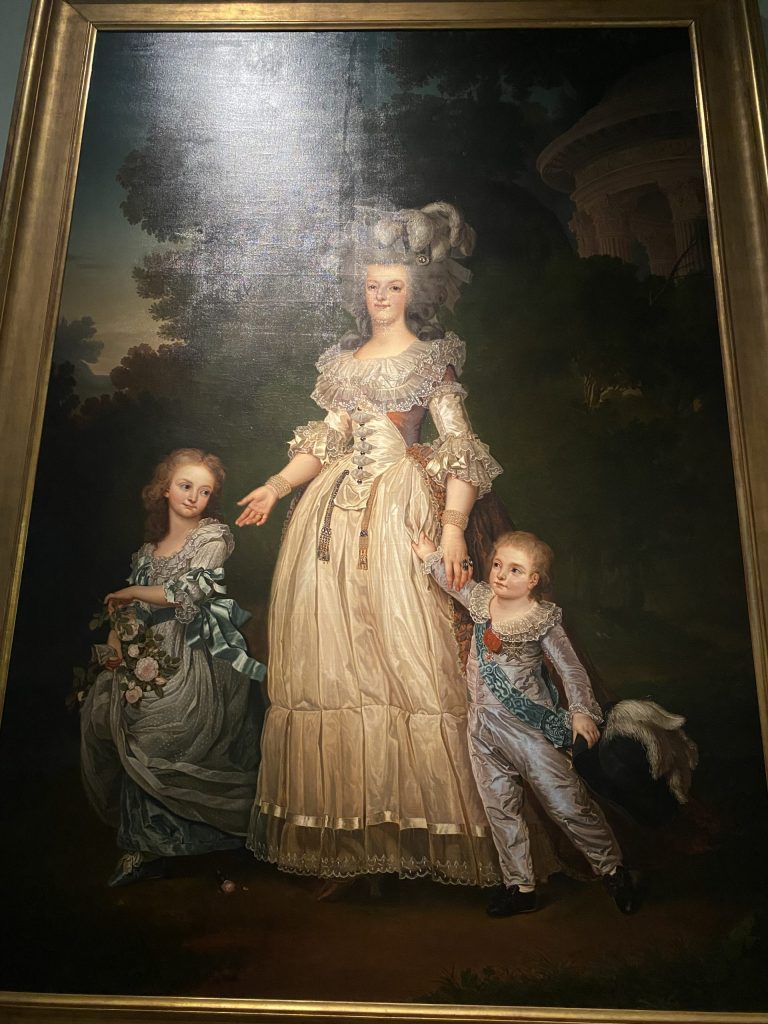
Although her life was ended prematurely, at just 37, Marie Anoinette’s legacy endures in more ways than one. The new V&A Exhibition will be running until 22 March next year with the hope it will offer a deeper dive into the famous figurehead.
Despite her major influence and like-ability, Grant said: “I think she’d be shocked by the extent and depth of her legacy. There has never been a point when people forget who she is.”

Join the discussion