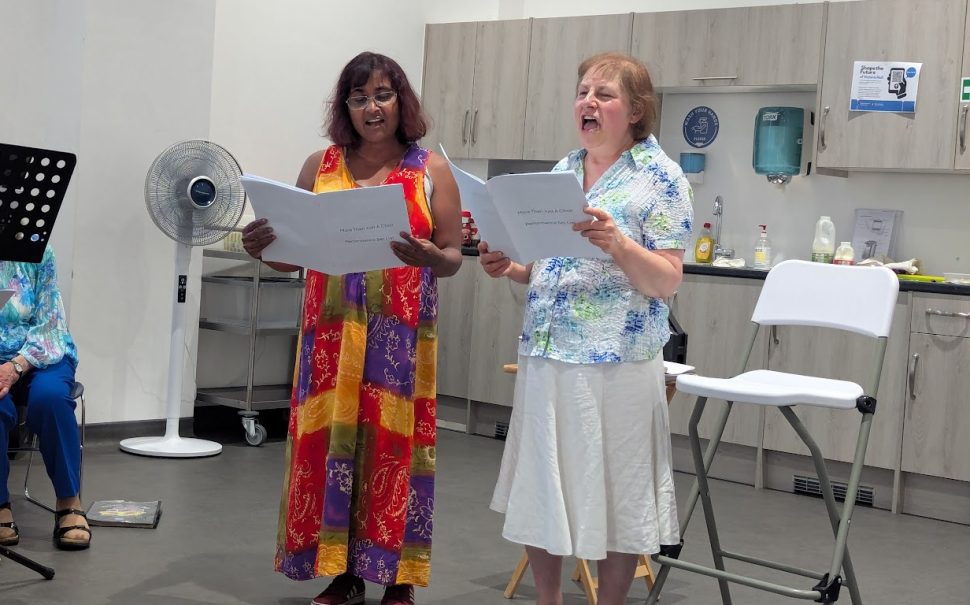
Amid a growing UK mental health crisis, one peer support group is doing mental wellbeing differently.
Mental health outcomes in the UK are getting worse despite record public spending.
The Telegraph recently reported that More than 1.4m claiming mental health benefits, and in July, writing in the Times, Melanie Phillips said: “The NHS is bust.
“More and more billions are periodically thrown at it, but its waiting lists are horrendous and relative to other comparable countries it does poorly in life expectancy and healthy life chances.”
In the midst of this challenging picture, an alternative approach towards supporting people with mental health issues has been running successfully in North West London for almost 16 years.
The Londoners visited Harrow’s More Than Just A Choir to find out how they’re doing mental health support differently.
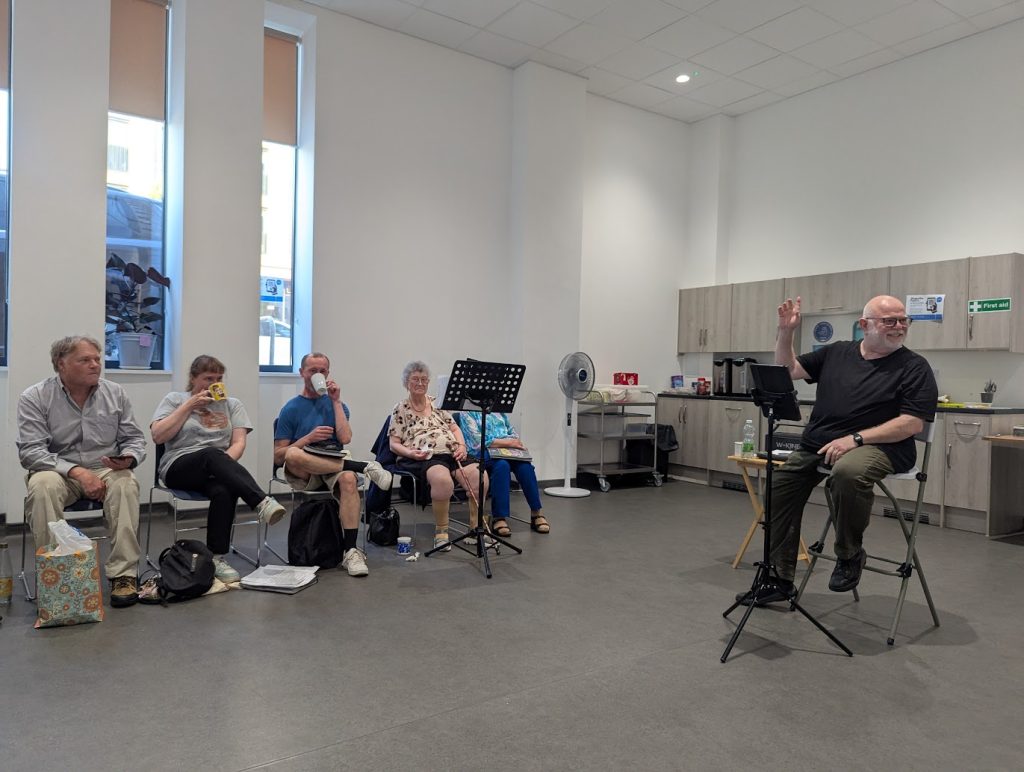
In 2009, facilitator and choir founder Margaret Carruthers was running a course called Confidence for life when a participant expressed a desire to sing.
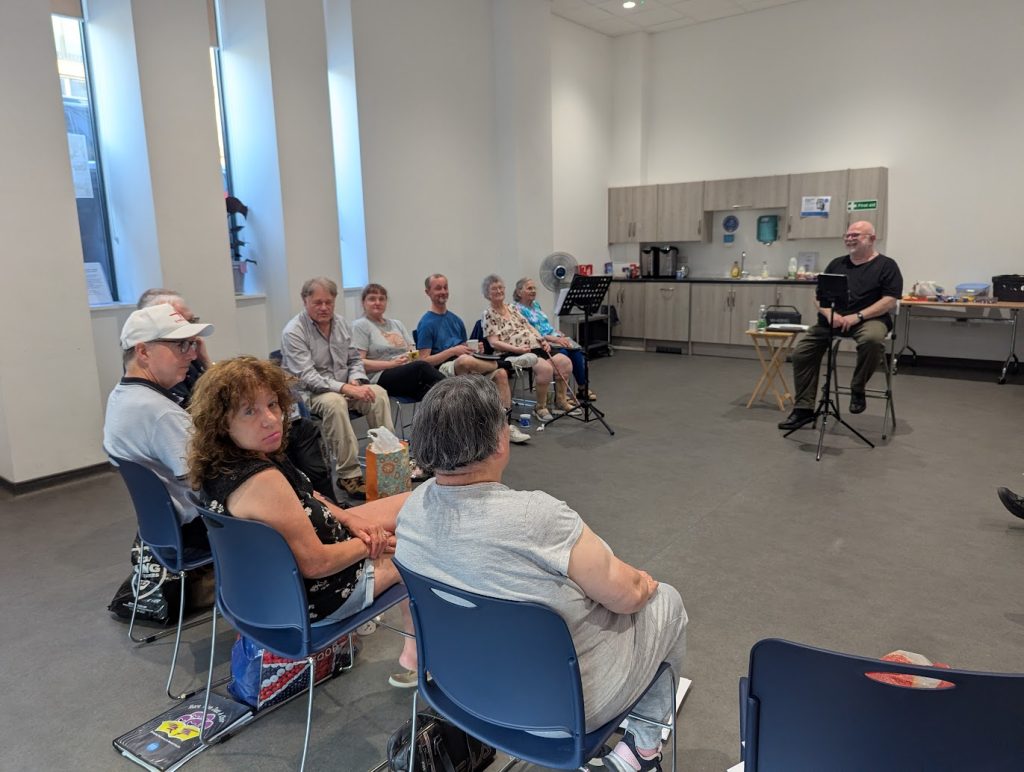
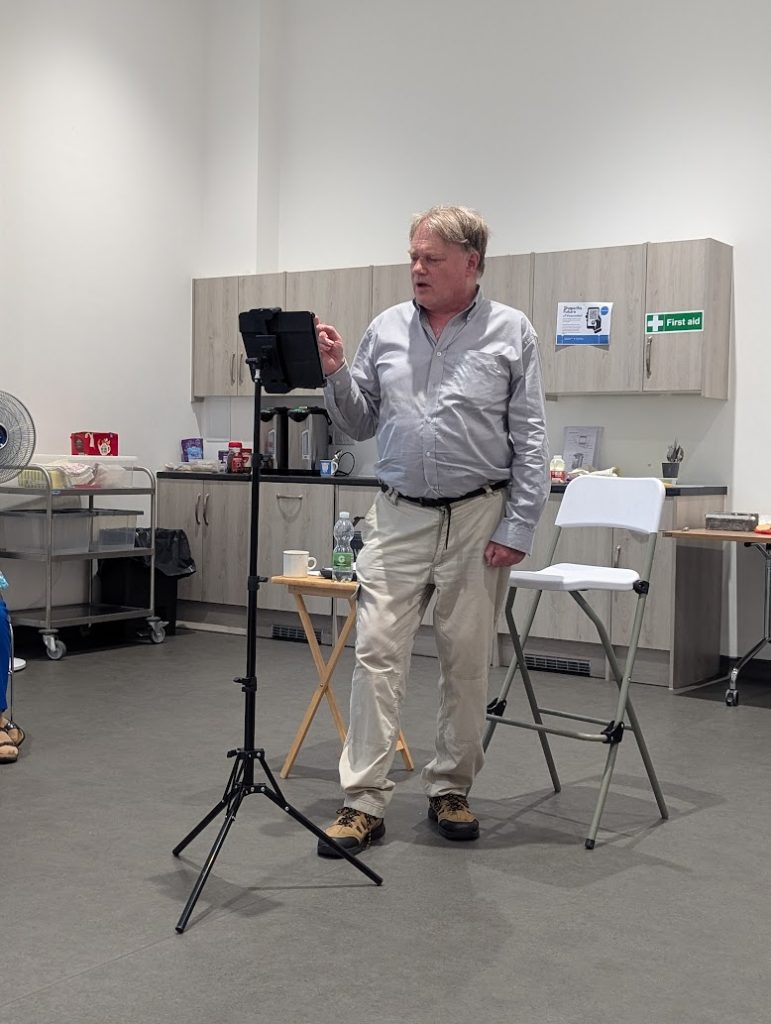
Now the choir meets weekly and provides musical creativity for people affected by mental ill-health, in a friendly and safe environment.
Although the aim of the course was to get people back into employment, Margaret says she purposely took the pressure of that away.
She feels that getting back into employment is a side effect of feeling better.
She said: “When people feel well and okay in themselves, they’re able to work, but If you put pressure on people to work who don’t feel right, it’s not going to work.”
The Choir Master, David Phelops got involved with the choir after attending one of Margaret’s courses in 2007.
Sixteen years later, he is still leading this vital source of connection to a core of 25 regulars and a periphery of 70 local users.
Over the years David estimates that the choir has welcomed between 300 and 400 members.
The choir sees a wide variety of people with varied needs.
David said: “I don’t know if people have proper mental health diagnoses or not, I don’t ask, but I know we have people coming who have schizophrenia, we have people with bipolar disorder, people with borderline personality disorder, anxiety and depression, some people are on the autistic spectrum, some have learning disabilities.”
He added: “there are no barriers to entry other than the ability to get there.”
David remembers one man who brought his wife with dementia and recalls him saying:
“I thought I was coming for R, but I realise now, it was as much for myself.”
David says belonging to the choir as the leader is much the same for him.
He said: “While I may be facilitating and leading it, it’s just as much for my own survival as anybody else’s.
“I’m performing to a great extend, David the conductor is a character in a way.
“It is like being on stage, and also providing that space where other people can thrive, and you know, holding that, it’s really huge, and does me a lot of good.”
Not only does the choir meet weekly to sing and socialise, they also travel and perform at events across the country.
In 2019 there was one week where they attended five events including singing at a mental health conference for the Archbishop of Canterbury, and a thirty minute audience with Prince Harry.
The Guildhall School of Music and Drama run a two year masters in music therapy that welcomes a coachload of choir goers each June for a session learning from their students.
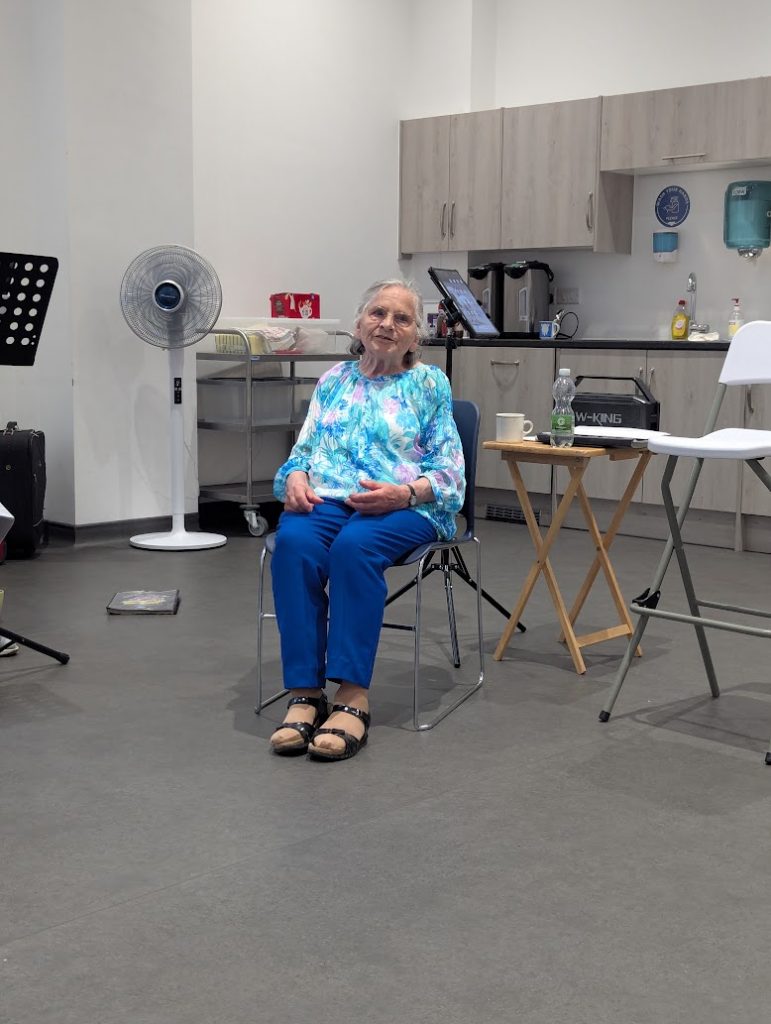
Christiane, a carer to her son and a More Than Just A Choir member, has been involved since the project began, and says it has changed her life.
“You see I’ve got a son who’s got mental difficulties, and I came for him, he didn’t pursue it, but I did, all these years,” she said.
“There is no criticism, you can be totally yourself.
“And we belong to each other, it’s a family, this choir.
Christiane says the choir reduces loneliness, a problem that many people with mental health difficulties face.
She said: “It has really helped, there is something to look forward to.
“People with mental illness are terribly lonely, and people don’t understand mental illness.
“You can have a broken leg and everybody will say “poor you”, but with mental illness, they’re a bit afraid.
“They’re afraid to approach it and so they need that group to feel united and to feel supported.”
Although the choir is unique, the approach shares some similarities with a movement that’s gaining momentum in the mental health world and could provide better outcomes for patients at a reduced cost to the NHS.
Sometimes called ‘social prescribing’, the idea is to connect patients to groups and activities that will improve their health outcomes rather than relying on conventional treatments like medication or therapy.
The NHS describes social prescribing as ‘a key component of Universal Personalised Care. It is an approach that connects people to activities, groups, and services in their community to meet the practical, social and emotional needs that affect their health and wellbeing’.
Where it’s used, data shows that this alternative approach works.
According to the National Academy for Social Prescribing, evaluations carried out in nine local health systems across England found that social prescribing can substantially reduce pressure on the NHS, including through reduced GP appointments, reduced hospital admissions and reduced A&E visits.
The concept is gaining momentum.
Recently, the Independent reported on Gloucestershire football club Forest Green, owned by Dale Vince of Ecotricity, giving free tickets to fans with depression with the aim of improving their mental health.
Vince developed the scheme with Labour MP Dr Opher who told the PA news agency: “I do think there’s something about watching football which does give you a sense of community.
“I think one of the biggest problems in our society is social isolation.”
Dr Opher claims that the ill effects of loneliness are significant.
He said: “You can quantify it, it’s the same health risk as smoking about 20 cigarettes a day. It’s really bad.”
Singing in public might be a daunting prospect for many people, and attending a football match won’t appeal to everyone, but that’s the point.
As Julia Hotz, the author of The Connection Cure: The Prescriptive Power of Movement, Nature, Art, Service, and Belonging puts it: “The tagline of social prescribing is to replace the question “What’s the matter with you?” with “What matters to you?”
According to the NHS Business Services Authority (NHSBSA), in 2023/2024, an estimated 89 million antidepressant drug items were prescribed in the UK.
And while for many people these prescriptions might be valuable, in 2025 Kings College London reported that three quarters of people who took antidepressants found them useful, connecting people to things that matter to them certainly seems worth a try.
More Thank Just A Choir meets weekly at Victoria Hall in Harrow on Tuesdays from 6.30pm to 8.30pm, with doors opening at 6pm.
More information can be found on their website here.
Featured image credit: Cressida Wetton



Join the discussion